
What to Do When Something Breaks at Home When You Live Alone
What to do when something breaks at home. Learn the first steps, how to handle leaks, power issues, and when to call for help.
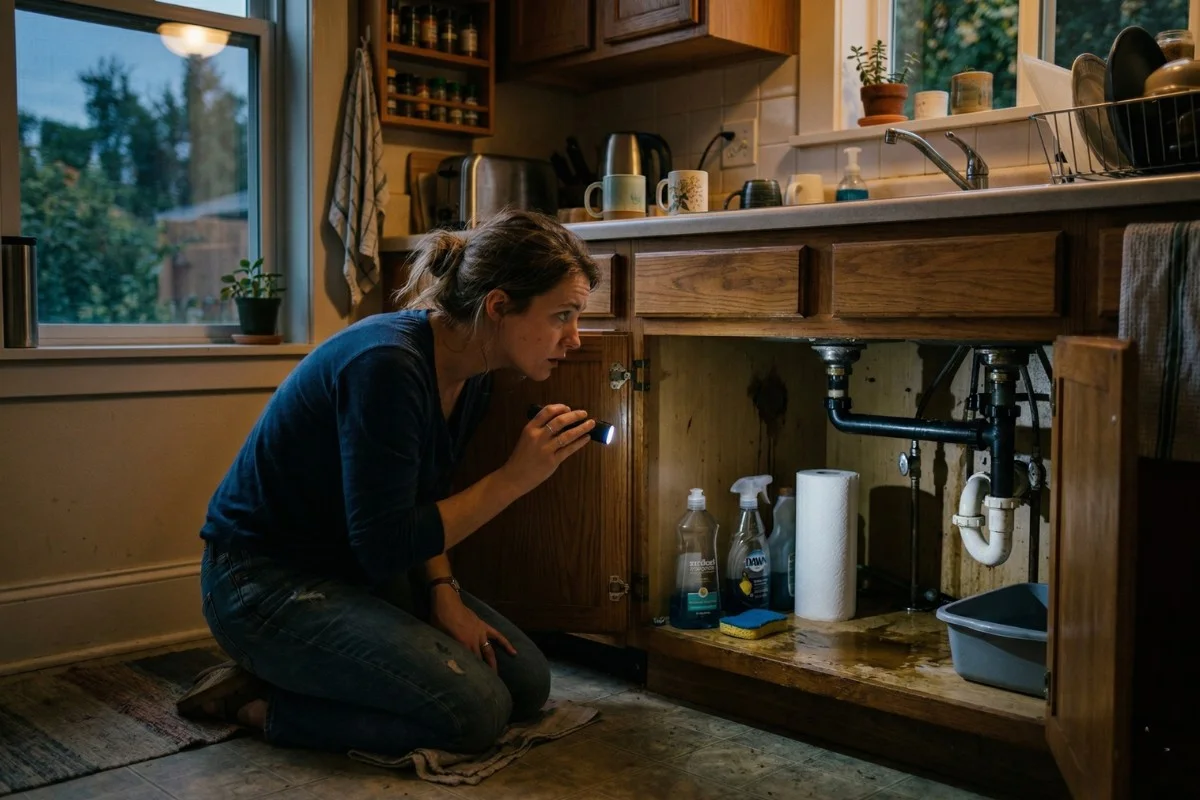
Something breaks at home, and I know how fast your brain starts racing.
Water is dripping, and you’re not sure if it’s about to get worse. An outlet suddenly stops working. The toilet won’t stop running. Or it’s already overflowing, and you’re just standing there staring at it.
And in that moment, you’re thinking… Do I try to fix this? Do I call someone? Is this even my problem or my landlord’s?
If you live alone, this hits differently. I’ve been there.
There’s no one else in the room to ask. No quick “hey, what do I do here?” You have to figure it out on your own, and it feels urgent even if you’re not sure it actually is.
That’s exactly why I put this guide together.
I’m not here to teach you how to become a plumber or an electrician. I just want to help you handle that moment when something breaks so you don’t panic or make it worse.
I’ll walk you through what to do first, how to figure out if it’s serious, what you can safely check yourself, and when it’s time to call someone.
- 1. What to Do in the First 2 Minutes (Don’t Skip This)
- 2. How to Tell If This Is an Emergency (or Something That Can Wait)
- 3. The 3 Shutoffs You Should Know (This Will Save You)
- 4. Common Situations and What to Do (Step by Step)
- 5. Who to Call First (So You Don’t Waste Time)
- 6. What Not to Do (These Mistakes Make Things Worse)
- 7. Build Your “I Live Alone” Home Emergency Setup
- 8. Quick Reference: What to Do When Something Breaks
- One last thing
- FAQs
1. What to Do in the First 2 Minutes (Don’t Skip This)
When something breaks, your first instinct is usually wrong.
You either panic and freeze… or you start touching things, trying random fixes, making it worse.
So before you do anything else, I want you to slow down for a second and follow this in order.
1.1 Step 1: Ask yourself one simple question
Is this dangerous or just annoying?
You don’t need to diagnose the problem. Just look for signs.
It’s dangerous if you notice:
- a burning smell, smoke, or sparks
- a gas smell or hissing sound
- water spreading fast or dripping near outlets
- sewage backing up
- the power going out in a strange way
- anything that feels unsafe, even if you can’t explain it
If it feels dangerous, don’t try to fix it. Your job is to get safe first.
If none of that is happening, it’s probably a damage or inconvenience problem, not an emergency.
1.2 Step 2: Stop the damage before you think about fixing anything
This is where most people mess up.
You don’t fix first. You contain first.
Here’s what that looks like in real life:
- Water leaking? Turn off the nearest water valve or stop using that fixture
- Toilet acting weird? Don’t flush again
- Something electrical acting up? Stop using that outlet or appliance
- Something smells off? Step away and don’t ignore it
You’re not solving the problem here.
You’re just stopping it from getting worse.
1.3 Step 3: Take 30 seconds to document it
I know this feels unnecessary in the moment, but it matters more than you think.
Before things dry up or stop working:
- take a few clear photos
- record a quick video if something is actively happening
- note the time and what you were doing right before it broke
This protects you if you’re renting. It also makes it way easier to explain the issue when you call someone.
1.4 Step 4: Now decide your next move
Only after you’ve done the first three steps.
At this point, you should know:
- whether it’s dangerous or not
- whether the situation is under control
- what exactly happened
Now you can decide calmly:
- do I need to call someone right now
- or can this wait a bit
We’ll go through exactly how to decide that next.
2. How to Tell If This Is an Emergency (or Something That Can Wait)
This is where most people get stuck.
Everything feels urgent when something breaks. But not everything actually is.
You don’t need a technical answer here. You just need a clear YES or NO, so you know what to do next.
2.1 It’s an emergency if…
You should treat it as urgent and call for help right away if:
- you smell gas or something like rotten eggs
- you see sparks, smoke, or anything burning
- water is leaking fast or spreading across the floor
- water is coming through the ceiling
- sewage is backing up into a sink, tub, or toilet
- your only toilet isn’t usable
- your entire apartment has no power, and it’s not a building-wide issue
- your front door or lock isn’t secure
- anything feels unsafe, and you don’t trust the situation
In these cases, don’t wait. Don’t try to “see if it fixes itself.”
Your job is to report it and get help as quickly as possible.
2.2 It can probably wait a few hours (or even until tomorrow) if…
These are annoying, but not urgent:
- a faucet is dripping
- one outlet isn’t working
- an appliance stopped working
- slow drain or minor clog
- small leak that’s contained and not spreading
- cosmetic damage or something that’s just… not working like it should
That doesn’t mean ignore it. Just don’t treat it like a crisis.
2.3 When you’re not sure
This happens a lot.
You’re standing there thinking, “I don’t know if this is serious or not.”
Here’s the rule I follow:
If it involves fire, gas, electricity, or fast-moving water, treat it as urgent. If it’s just inconvenient and stable, you have time.
And if your gut is telling you something’s off… trust that. You don’t need to be 100% sure to take it seriously.
3. The 3 Shutoffs You Should Know (This Will Save You)
You don’t need to know how to fix everything.
But if you know how to stop water and power quickly, you can prevent most situations from getting worse.
I wish someone had shown me this earlier, because once you know it, you stop panicking as much.
3.1 How to shut off your toilet water
If your toilet is overflowing or won’t stop running, this is the fastest way to get control.
- Take the lid off the tank
- Push the flap down inside the tank to stop water from flowing
- Look behind the toilet near the wall
- You’ll see a small valve, turn it clockwise until it stops
That’s it. The water stops.
Do this before you even think about plunging or fixing anything.
3.2 How to shut off water under your sink
If you see water leaking under your kitchen or bathroom sink:
- Open the cabinet under the sink
- You’ll see two small valves, one for hot and one for cold
- Turn both clockwise
This cuts off water just to that sink, not the whole house.
If the leak keeps going even after this, or you can’t find the source, that’s your sign to stop and call someone.
3.3 What to do when a breaker trips
If a room suddenly loses power or something stops working:
- First, unplug anything that was running in that area
- Find your breaker panel
- Look for a switch that’s in the middle or slightly off
- Flip it fully OFF, then back ON
Power should come back.
If it trips again, don’t keep resetting it. That’s your signal something deeper is wrong.
3.4 Quick note (don’t skip this)
You don’t have to memorize all this right now.
But if you get a few minutes later today, just:
- check where your toilet valve is
- open the cabinet and look at the sink valves
- find your breaker panel
That 2-minute check will make a huge difference when something actually goes wrong.
If you want a full walkthrough of basic home skills, here’s the complete Home Maintenance Skills guide.
4. Common Situations and What to Do (Step by Step)
You don’t need to guess anymore. If something just broke, find the closest situation below and follow it.
4.1 If your toilet is overflowing
This one gets messy fast, so act quickly.
What to do first:
- Take the tank lid off and push the flap down
- Turn the valve behind the toilet clockwise
- Do not flush again
What to do next:
- Use a plunger once the water stops rising
- Clean up the water so it doesn’t spread
What not to do:
- Don’t keep flushing hoping it will fix itself
- Don’t ignore it if water keeps rising
Who to call:
- Your landlord or maintenance if it doesn’t stop
- A plumber, if needed
4.2 If water is leaking under your sink
This usually looks small at first, but it can damage cabinets and flooring.
What to do first:
- Turn off both valves under the sink
- Take everything out of the cabinet
What to do next:
- Wipe the area so you can see where it’s coming from
- Place a container or towel under the leak
What not to do:
- Don’t ignore it just because it’s slow
- Don’t keep using the sink
Who to call:
- Landlord or maintenance
- Plumber if it’s your responsibility
4.3 If water is coming through the ceiling
This feels scary, and honestly, it should be taken seriously.
What to do first:
- Move anything valuable out of the area
- Place a bucket or towels under the leak
What to do next:
- Avoid touching anything electrical nearby
- Keep an eye on the ceiling for sagging
What not to do:
- Don’t ignore it thinking it will stop on its own
- Don’t stay under a sagging ceiling
Who to call:
- Landlord or building management immediately
4.4 If a breaker trips and one area loses power
This is common and usually not serious, but still needs attention.
What to do first:
- Unplug devices in that area
- Reset the breaker
What to do next:
- Plug things back in one by one
What not to do:
- Don’t keep resetting if it trips again
- Don’t ignore buzzing or burning smells
Who to call:
- Landlord or electrician if it keeps happening
4.5 If your whole place loses power
Before panicking, check if it’s just you.
What to do first:
- Look outside or check with neighbors
- Check your breaker panel
What to do next:
- Keep fridge and freezer closed
- Use a flashlight instead of your phone if possible
What not to do:
- Don’t assume it’s your fault immediately
Who to call:
- Utility provider if it’s a wider outage
- Landlord if it’s just your unit
4.6 If your only toilet stops working
This is more urgent than people think.
What to do first:
- Try plunging
- Check if it’s clogged or not flushing at all
What to do next:
- Stop using it if it’s not working properly
What not to do:
- Don’t “wait it out” for days
Who to call:
- Landlord or maintenance right away
4.7 If you smell gas
This is not something to figure out yourself.
What to do first:
- Leave the area immediately
- Do not switch anything on or off
What to do next:
- Get to a safe place
What not to do:
- Don’t try to find the source
- Don’t ignore the smell
Who to call:
- Emergency services or gas provider
4.8 If you see sparks or smell something burning
Treat this seriously every time.
What to do first:
- Stop using that outlet or appliance
- Step away if needed
What to do next:
- Turn off power if you know how and it’s safe
What not to do:
- Don’t keep testing it
- Don’t assume it’s “nothing”
Who to call:
- Emergency services if it feels unsafe
- Electrician or landlord
5. Who to Call First (So You Don’t Waste Time)
When something breaks, the biggest delay usually comes from this question:
“Who am I even supposed to call?”
Let’s make it easy.
5.1 Call emergency services first if it feels unsafe
If there’s any real safety risk, don’t overthink it.
Call emergency help first, not your landlord.
That includes:
- gas smell
- fire, sparks, or burning smell
- anything that feels like it could turn dangerous quickly
Your safety comes first. Everything else can wait.
5.2 Call your landlord or maintenance for most problems
This is your default.
If you’re renting, your landlord or building maintenance is usually responsible for:
- leaks
- plumbing issues
- electrical problems
- broken fixtures
- ceiling damage
- no water or no power (inside your unit)
Even if you’re not 100% sure, it’s still fine to reach out.
You’re not expected to diagnose the problem. Just report it clearly.
And if you’re wondering whether this is your problem or your landlord’s, here’s exactly what they’re responsible for.
5.3 When it makes sense to call a plumber or electrician directly
This depends on your setup, but in general:
- if your landlord tells you to handle it
- if it’s something clearly caused by you
- or if you need faster help and you’re okay paying
If you’re unsure, always message your landlord first and ask.
5.4 If your landlord isn’t responding
This is where people get stuck and just… wait.
Don’t.
If it’s urgent:
- follow up again
- call instead of texting
- clearly say it’s urgent
If there’s active damage (like water spreading), don’t wait hours hoping for a reply. Take action to contain it and keep pushing for a response.
5.5 What to Say When You Report the Problem
You don’t need to write a perfect message. You just need to be clear.
Here’s a simple way to do it:
Message example:
“Hi, I’m in [your unit]. There’s a leak under the kitchen sink that started about 20 minutes ago. I’ve turned off the water and placed towels, but it’s still dripping. Sharing photos here. Please let me know how to proceed.”
That’s it.
You’re telling them:
- what happened
- when it started
- what you’ve already done
- how serious it is
5.6 If it’s urgent and they’re not replying
Send a follow-up like this:
“Hi, this is urgent. Water is still leaking and could cause damage. I need immediate assistance.”
Short. Direct. No over-explaining.
Perfect. This one should feel like a quick reality check. Fast, sharp, memorable.
6. What Not to Do (These Mistakes Make Things Worse)
When something breaks, it’s really easy to make it worse without realizing it.
I’ve done a few of these myself. Most people have.
So before you try to “handle it,” just keep these in mind.
6.1 Don’t keep trying the same thing again and again
If something didn’t work the first time, stop.
- toilet still acting up after one flush → don’t flush again
- breaker trips again → don’t keep resetting
- appliance smells weird → don’t keep testing it
Repeating the same action usually makes the situation worse, not better.
6.2 Don’t ignore small leaks or “minor” issues
This is how small problems turn into big ones.
A slow drip under the sink can damage the cabinet. A small ceiling leak can spread behind the walls.
If something is leaking, even a little, treat it seriously.
6.3 Don’t touch water near anything electrical
This is one of the biggest risks.
If you see:
- water near outlets
- water dripping from the ceiling near lights
- wet floors around electrical points
Stay away. Don’t try to fix it yourself.
6.4 Don’t try to investigate a gas smell
If you smell gas, your job is not to figure out where it’s coming from.
Don’t:
- turn switches on or off
- use your phone near it
- try to “check” appliances
Just leave and get to a safe place.
6.5 Don’t take things apart unless you know exactly what you’re doing
It’s tempting to open things up and “see what’s wrong.”
But:
- pipes can loosen and leak more
- electrical parts can be dangerous
- you can end up causing more damage
If you’re not sure, don’t touch it.
6.6 Don’t wait too long to report the problem
This one matters more than people think.
Waiting can:
- make the damage worse
- make you responsible for it
- delay the fix even more
Even if you’re unsure, it’s better to report early.
6.7 Quick way to remember this
If something feels:
- risky
- unclear
- or like it could get worse
Pause. Don’t guess your way through it.
7. Build Your “I Live Alone” Home Emergency Setup
You don’t need a big toolkit or anything complicated.
But having a few basic things ready can save you a lot of stress when something goes wrong.
I learned this the hard way. When something breaks, you don’t want to be searching for a bucket or a flashlight in the middle of it.
7.1 Keep these in one easy-to-reach spot
Nothing fancy. Just practical.
- a flashlight
- extra batteries
- a basic plunger
- a small bucket
- a few old towels or cloths
- rubber gloves
- a simple screwdriver
That’s enough to handle most situations until help arrives.
7.2 Save these contacts right now
Do this once, and you won’t have to think about it later.
- your landlord or building maintenance number
- local plumber
- local electrician
- your building security (if you have one)
- emergency services
Don’t rely on searching when something is already going wrong.
7.3 Do this quick 2-minute check once
You don’t need to memorize everything. Just get familiar.
- check where your toilet shutoff valve is
- open under your sink and look at the valves
- find your breaker panel
- know where your main door lock and keys are
That’s it.
You’re just making sure nothing feels unfamiliar when you actually need it.
7.4 Optional but helpful
If you want to go one step further:
- keep a power bank charged
- store a few trash bags for quick cleanup
- keep a small notepad or use your phone to note issues
None of this is required, but it makes things smoother.
8. Quick Reference: What to Do When Something Breaks
If you don’t want to read everything again, just use this.
Find your situation and follow the first step.
8.1 Toilet overflowing
First move: Shut off water behind the toilet, don’t flush again
Emergency? Yes, if it’s overflowing or your only toilet
Who to call: Landlord or plumber
8.2 Water leaking under sink
First move: Turn off both valves under the sink
Emergency? Sometimes, especially if it’s spreading
Who to call: Landlord or plumber
8.3 Water coming through ceiling
First move: Move things away, place a bucket
Emergency? Yes
Who to call: Landlord or building management
8.4 One room lost power
First move: Unplug devices, reset breaker
Emergency? No, unless you see sparks or smell burning
Who to call: Landlord or electrician if it keeps happening
8.5 Whole apartment lost power
First move: Check if others are affected, check breaker
Emergency? Depends
Who to call: Utility provider or landlord
8.6 Only toilet not working
First move: Try plunging once
Emergency? Yes, if it’s your only one
Who to call: Landlord or maintenance
8.7 Gas smell
First move: Leave immediately
Emergency? Always
Who to call: Emergency services or gas provider
8.8 Sparks or burning smell
First move: Stop using that outlet or appliance
Emergency? Yes
Who to call: Emergency services or electrician
8.9 Small leak or drip
First move: Contain it with towels or a container
Emergency? No, but don’t ignore
Who to call: Landlord or plumber
8.10 Door lock not working
First move: Make sure you’re safe and secure
Emergency? Yes
Who to call: Landlord or locksmith
One last thing
You don’t need to remember all of this.
Just remember this:
- stop the damage
- stay safe
- then call the right person
That’s it.
FAQs
My toilet is overflowing. What should I do first?
First, stop the water. Take the tank lid off and push the flap down, then turn the valve behind the toilet clockwise. Don’t flush again. Once the water stops rising, then you can try using a plunger or call for help.
Is a clogged toilet an emergency in an apartment?
If it’s your only toilet, yes, treat it as urgent. You can’t really “wait it out.” If you have another working toilet, it’s less urgent but still something you should fix quickly.
My breaker tripped and won’t reset. What now?
Unplug everything in that area and try resetting it once. If it trips again, stop. Don’t keep flipping it. That usually means there’s a deeper electrical issue, and it’s time to call your landlord or an electrician.
Should I keep resetting a breaker if it keeps tripping?
No. One reset is fine. After that, leave it. Repeated resets can make things worse and can be unsafe.
Water is leaking under my sink. Do I need to turn off the main water?
Start with the valves under the sink first. That usually solves it. If the leak continues or you’re not sure where it’s coming from, then stop using the sink and call for help.
My ceiling is leaking. Who should I call first?
Your landlord or building management. This is usually coming from another unit or the building itself, so it’s not something you can fix on your own.
Is losing power in one room an emergency?
Usually not. Try resetting the breaker first. But if you notice sparks, burning smells, or it keeps happening, then treat it more seriously and call for help.
What counts as an emergency maintenance issue?
Anything that affects safety or can cause serious damage. Think gas leaks, fire risk, fast water leaks, sewage backup, no power, no water, or a broken lock. If it feels unsafe or urgent, it probably is.
What should I document before reporting a problem?
Take clear photos, record a quick video if something is actively happening, and note when it started. Also remember what you were doing right before it broke. This helps a lot when explaining the issue.
What if my landlord isn’t responding?
If it’s urgent, follow up again. Call instead of texting. Be direct and say it’s urgent. If there’s active damage, don’t just wait. Do what you can to contain it and keep pushing for a response.
I’m not sure if I should fix it myself or call someone
If it involves electricity, gas, or anything risky, don’t touch it. Call someone. If it’s something simple and safe, you can try basic steps. When in doubt, it’s always better to ask first.