
What Your Landlord Is Responsible for (and What You Are)
A clear guide to what your landlord is responsible for, what renters should handle themselves, and how to deal with apartment repairs the smart way.
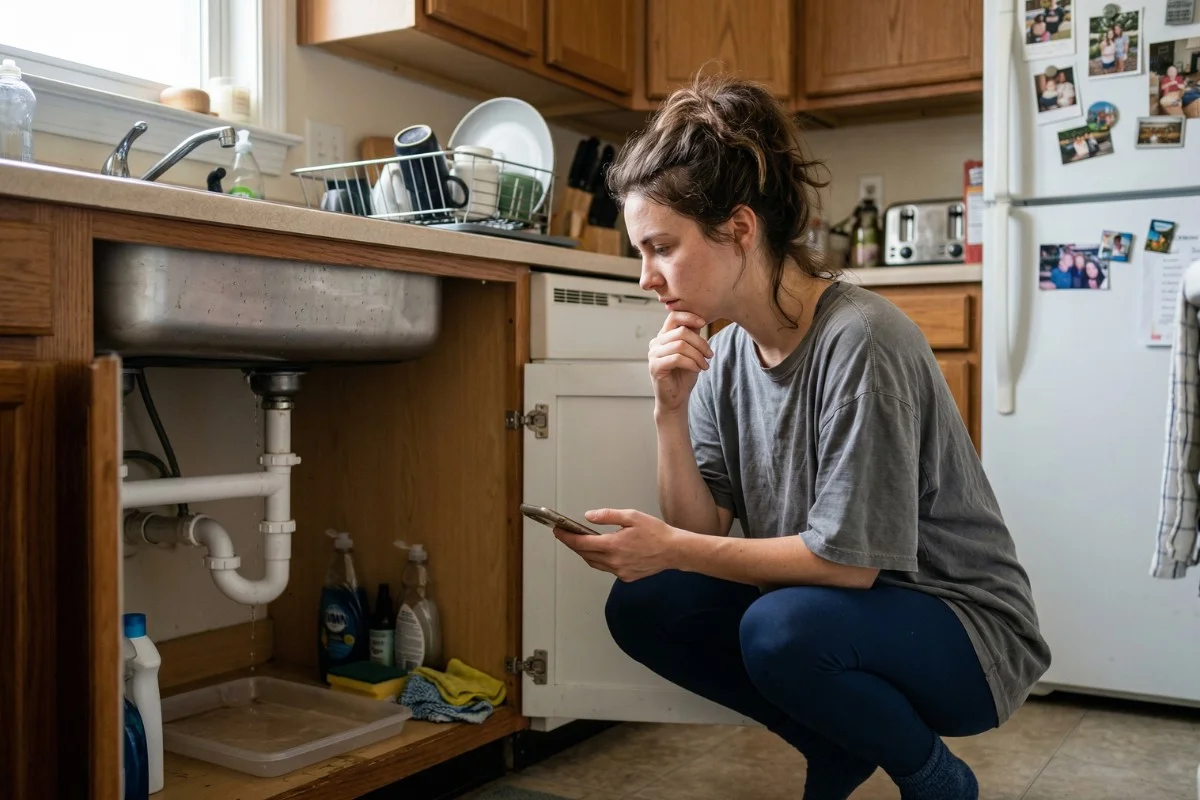
When I moved into my first apartment alone, nobody handed me a rulebook.
So when the heat stopped working mid-January, I did what most of us do: I texted my landlord, got a “we’ll check on it” reply, and spent three nights under every blanket I owned, wondering if I was even allowed to push harder.
Turns out I was. A lot harder.
This guide is everything I wish someone had told me, who actually pays for what, what your landlord can’t legally get away with, and what to do when they try anyway. We’re covering:
- Pests, mold, broken heat, and appliances; whose problem is it
- Normal wear and tear vs. damage you actually owe for
- How to protect your security deposit from day one
- What to do when your landlord ghosts your repair requests
- Your rights when a maintenance worker shows up unannounced
One thing before we start: this guide covers US renters generally. Laws vary by state, sometimes significantly. For your specific state’s rules, Nolo’s state landlord-tenant law directory is the best starting point.
Let’s get into it.
Table of Contents
- 1. What is a landlord legally required to fix in an apartment?
- 2. Who is responsible for pest control in a rental apartment?
- 3. Is my landlord responsible for mold in my apartment?
- 4. Who pays for heating and air conditioning repairs in a rental?
- 5. Who is responsible for broken appliances in a rental apartment?
- 6. What counts as normal wear and tear versus damage I’ll be charged for?
- 7. Can my landlord enter my apartment without notice?
- 8. What should I do if my landlord won’t fix something?
- Landlord vs. Tenant: Who Handles What
- 9. How do I protect my security deposit?
- 10. What rights do I have as a woman renting alone?
- 11. What should I look for in my lease before signing?
- Final Words
1. What is a landlord legally required to fix in an apartment?
Your landlord is legally required to keep your apartment safe and livable. This isn’t a favor, and it’s not negotiable.
Every US state recognizes something called the implied warranty of habitability, which means your landlord must maintain certain basic conditions, whether your lease mentions it or not.
That includes:
- Structural integrity: walls, roof, floors, stairs
- Working plumbing and hot water
- Heat (and AC if it came with the unit)
- Electricity and working outlets
- Pest-free conditions at move-in
- Functional locks and secured entry points
- Working smoke and carbon monoxide detectors
- No toxic hazards like mold, lead, or asbestos
Your side of the deal is simpler. Keep the place clean, report problems promptly, and don’t cause damage.
Small stuff like replacing lightbulbs, changing HVAC filters, and unclogging a drain that you clogged? Usually yours (If you’re not sure how to handle any of it, the home maintenance guide covers everything a woman renting alone should know how to do herself).
The easiest way to think about it: your landlord owns the building. When the building ages or something breaks through normal use, that cost belongs to them, NOT you.
One thing worth knowing about your lease: some leases include language like “tenant accepts unit as-is” or “tenant is responsible for all repairs.”
In most states, these clauses are unenforceable when it comes to habitability.
Your landlord cannot legally sign that obligation away, no matter what the lease says.
2. Who is responsible for pest control in a rental apartment?
In a multi-family building, pest control is almost always your landlord’s responsibility.
Cockroaches, mice, and bed bugs don’t stay in one unit. They come through shared walls, pipes, and building infrastructure.
That makes it a building problem, which makes it your landlord’s problem.
2.1 Cockroaches and mice
If you’re seeing roaches or mice, report it in writing immediately. Don’t spray or set traps yourself first.
Doing that before your landlord has a chance to respond can muddy the paper trail and give them room to argue the infestation was minor or under control.
Florida state law explicitly names cockroaches, ants, mice, and rats as landlord responsibilities.
Most other states cover them under general habitability standards, even without naming them specifically.
2.2 Bed bugs
Bed bugs are trickier because landlords often try to blame the tenant for bringing them in.
In a shared building, this argument rarely holds up. If neighboring units have them, the building has them.
Document everything, report in writing, and ask your landlord for written confirmation that adjacent units have been inspected.
2.3 When your landlord says it’s your fault
This is the most common deflection. You’ll hear things like “you must have brought them in” or “if you kept the place cleaner this wouldn’t happen.”
Neither is a legal argument. Cleanliness does not cause a cockroach infestation in a shared building.
Don’t apologize, don’t argue. Just keep your communication in writing and let the paper trail do the work.
If your landlord ignores a pest problem after a written request, contact your local housing authority or code enforcement.
A single inspector visit tends to move things faster than months of follow-up texts.
3. Is my landlord responsible for mold in my apartment?
YES, if the mold is caused by a building issue.
A leak in the wall, poor ventilation, a damaged roof, water coming in through a window seal. Those are building problems, and your landlord is responsible for fixing both the source and the mold it caused.
You’re only responsible for the mold you caused yourself through your own behavior, like consistently leaving wet towels on the floor, never running the bathroom exhaust fan, or blocking vents.
In practice though, most mold starts with a building issue your landlord ignored or never fixed properly.
3.1 The bleach trick
A lot of landlords will send someone to spray bleach on visible mold and call it done.
That is not remediation. Bleach treats the surface. It does nothing about the moisture source causing the mold to grow.
If your landlord does this, put it in writing that the underlying issue has not been addressed, and you expect it to be fixed properly.
3.2 “It’s not black mold so it’s fine”
You will hear this. It is not accurate. Black mold refers to one specific species.
Any mold affecting your air quality is a habitability issue, and you don’t need a lab test or a specific mold type to have grounds for action.
If you’re having symptoms, say so in writing.
California requires landlords to disclose known mold before you move in. If they knew and didn’t tell you, that’s a separate issue worth looking into.
3.3 What to do while you wait for repairs
Your landlord isn’t going to fix it overnight.
In the meantime, run a dehumidifier in affected areas, keep the bathroom exhaust fan running after every shower, and don’t paint over it yourself.
Painting over mold before it’s properly remediated makes it worse and could be used to argue you made the problem harder to fix.
4. Who pays for heating and air conditioning repairs in a rental?
Heat is non-negotiable. Every US state requires landlords to provide working heat as part of basic habitability. If your heat goes out, your landlord is legally required to fix it. Full stop.
Air conditioning is different. Most states don’t require landlords to provide AC.
But here’s the part that matters: if your unit came with an AC unit when you moved in, your landlord is required to maintain it.
They can’t provide it, have it break, and then tell you it’s not their problem.
4.1 How fast does my landlord have to fix broken heat?
Faster than most other repairs. A broken heater in winter is a health and safety issue, not a convenience issue.
When you report it, use the word emergency in your message. Most housing codes treat heating failures as urgent violations requiring repair within 24 to 72 hours.
Document the temperature. Take a photo of a thermometer in your apartment with the date visible. That timestamp matters if this escalates.
Chicago specifically requires a minimum indoor temperature of 68 degrees Fahrenheit from September through June.
If you’re in Illinois, that’s the number to reference.
4.2 What about air conditioning?
If your state doesn’t require AC and your unit didn’t come with it, your landlord has no obligation to provide it.
If your unit came with AC and it breaks, they must repair it. The rule is simple: if they provided it, they maintain it.
California has no statewide AC requirement, but if AC was in the unit at move-in, the landlord must keep it working. Same logic applies in most other states.
4.3 What to do while you wait
Keep every message about the broken heat or AC in writing. Note dates and temperatures each day.
If your landlord doesn’t respond within 24 to 48 hours on a heating issue, skip straight to code enforcement.
This is one situation where you don’t need to wait through the normal follow-up cycle.
5. Who is responsible for broken appliances in a rental apartment?
If the appliance came with the unit when you moved in, your landlord is responsible for repairing or replacing it. If you brought it yourself, it’s yours to deal with.
This applies to refrigerators, stoves, dishwashers, washing machines, dryers, and anything else that was already there on move-in day.
The age of the appliance doesn’t change this. A 12-year-old refrigerator dying of natural causes is still your landlord’s appliance, not your problem to replace.
5.1 What if my landlord says the appliance is old and not worth fixing?
That’s their financial problem, not yours. They can replace it with a cheaper model if they want, but they cannot simply leave you without a functioning appliance that was part of the unit.
If a stove or refrigerator is missing or broken for an extended period, that’s a habitability issue.
One quirk worth knowing: California law doesn’t actually require landlords to provide a refrigerator. But if yours came with one, they must maintain it.
The moment they provided it, it became their responsibility.
5.2 What about food I lost because the fridge broke?
Your landlord’s insurance covers the building, not your belongings or your groceries. This is where renters’ insurance comes in.
Most standard renters’ insurance policies cover food loss from a broken appliance.
The average policy costs between 15 and 30 dollars a month, and most women renting alone don’t have it. It’s worth getting.
5.3 How to report a broken appliance
Same process as any repair. Put it in writing, include the date, describe the impact.
“The refrigerator stopped cooling on Tuesday. All my food has spoiled. I need this repaired or replaced within 7 days.”
Short, factual, dated. That’s your paper trail.
6. What counts as normal wear and tear versus damage I’ll be charged for?
Normal wear and tear is the natural aging of a unit through ordinary everyday use. Your landlord absorbs this cost.
It is not something they can deduct from your security deposit, and it is the most common way landlords try to keep money they are not entitled to.
The simplest way to think about it: if it happened because you lived there normally, it’s wear and tear.
If it happened because of something you did carelessly or negligently, it’s damage.
6.1 What counts as normal wear and tear
- Paint that has faded, scuffed, or dulled after 2 to 3 years
- Carpet that is worn or flattened after 5 or more years
- Small nail holes from hanging pictures
- Worn finish on hardwood floors from regular foot traffic
- Loose hinges or door handles from regular use
- Minor scratches on appliances from normal cooking or cleaning
6.2 What counts as damage you may owe for
- Large holes in walls
- Carpet stains, burns, or pet damage
- Broken fixtures or appliances from misuse
- Crayon or marker on walls
- Deeply gouged floors from dragging furniture without pads
6.3 The depreciation rule your landlord is hoping you don’t know
The US Department of Housing and Urban Development publishes expected life spans for common apartment items.
- Carpet has a 5-year expected life
- Paint has a 3-year expected life
- Appliances vary, but most fall between 10 and 15 years
What this means in practice: if the carpet was already 4 years old when you moved in and looks worn when you leave, you cannot be charged for new carpet.
If the walls were last painted 4 years ago and need repainting, that cost belongs to your landlord.
They cannot charge you to restore something that was already at or near the end of its useful life.
Your landlord cannot use your security deposit to upgrade their property. New carpet, because the old one was worn out, is an upgrade.
A fresh coat of paint after 4 years is maintenance. Neither is your bill.
7. Can my landlord enter my apartment without notice?
No. In most US states, your landlord is required to give written notice before entering your apartment. The standard is 24 hours in California, New York, Florida, Illinois, and Washington.
A lease clause that says “landlord may enter at any time” is likely unenforceable in these states, regardless of what you signed.
The only exception is a genuine emergency.
- A burst pipe flooding the unit
- A gas leak
- A fire
That kind of emergency. Your landlord being in the neighborhood or wanting to do a quick inspection does not qualify.
7.1 What counts as an emergency
An emergency is a situation where waiting 24 hours would cause serious damage to the property or serious harm to a person.
It has a narrow legal definition. Landlords sometimes use the word loosely to justify unannounced visits.
If your landlord enters without notice and there was no actual emergency, that is a violation of your right to quiet enjoyment and, in many states, carries financial penalties.
7.2 What to do if your landlord enters without proper notice
Document it immediately. Write down the date, time, what happened, and who entered.
Then send your landlord a written message referencing your state’s entry notice requirement and stating clearly that you expect proper notice going forward.
Keep the tone factual, not emotional. One documented instance plus a written notice usually stops the pattern.
If it continues, it becomes part of your escalation case and, in some states, grounds for lease termination without penalty.
7.3 Your rights during maintenance visits when you live alone
This is the part the standard tenant rights guides never cover.
You have the right to request a specific time window for maintenance visits. You have the right to be present when workers enter.
You can ask any maintenance worker for ID before letting them in. That is not rude, it is reasonable, and any legitimate property management company will expect it.
If you are uncomfortable with a specific worker for any reason, you can request a different person.
It will not always work, but it is worth asking and worth putting in writing so there is a record.
A few practical things worth knowing: door alarms, chain locks, and portable door jammers are additions most tenants can make without violating a standard lease.
They are inexpensive and genuinely useful when you live alone.
If unauthorized entry becomes a pattern and your landlord is unresponsive to written requests, contact your local housing authority.
Repeated unauthorized entry is a serious violation, and inspectors take it seriously.
8. What should I do if my landlord won’t fix something?
Send a written request with a clear deadline. That single step is what makes every other remedy available to you.
Without a written request on record, you have very little to stand on legally. With it, you have options.
Here is the exact order to follow.
8.1 Step 1: Send a written request on day one
Text works. Email is better because it’s easier to forward and harder to delete. Keep it short and factual.
Include what the problem is, when you noticed it, how it affects your use of the apartment, and a reasonable deadline to respond.
Here’s a template you can copy and send tonight:
“Hi [landlord name], I’m writing to report [describe the problem] in my unit at [address]. I noticed this on [date]. This is affecting [describe impact]. Please let me know your plan to fix this within 7 days. Thank you.”
For emergencies like no heat or a broken lock, change that to 24 hours.
8.2 Step 2: Follow up in writing on day 7 to 10
One follow-up referencing your original message. Still factual, still neutral. You’re not venting, you’re building a paper trail.
“Hi [landlord name], following up on my message from [date] regarding [problem]. I haven’t heard back yet. Please confirm when this will be repaired.”
That’s it. Short. Documented. Dated.
8.3 Step 3: Contact code enforcement on day 14 to 21
Most tenants don’t know this option exists. Every city and county in the US has a housing authority or building department that handles tenant complaints.
Filing a complaint is free. In most jurisdictions, it is anonymous.
An inspector will visit, document violations, and issue a notice to your landlord. That official notice tends to move things faster than months of unanswered texts.
To find yours, search your city or county name plus housing code enforcement or building department tenant complaint.
One important thing: most states have anti-retaliation laws protecting tenants who file complaints.
In California, any landlord action taken within 180 days of a complaint is legally presumed to be retaliation. Know that before you hesitate.
8.4 Step 4: Repair-and-deduct or rent withholding
These are real legal remedies, but they carry real risk if done incorrectly.
Repair-and-deduct means you hire someone to fix the problem yourself and deduct the cost from your next rent payment.
In California, this is capped at one month’s rent. Rent withholding means stopping rent payments until repairs are made, with most states requiring you to deposit rent into a separate escrow account in the meantime.
Both require written notice to your landlord first, and both have specific state rules.
Getting either wrong can trigger eviction proceedings even if your landlord was originally in the wrong.
Verify your state’s exact process before using either remedy.
8.5 Step 5: Small claims court
For security deposit disputes and unreimbursed repair costs, small claims court is a real and accessible option.
Filing fees are low, usually between 30 and 75 dollars. You don’t need a lawyer.
Some states award double or triple damages for wrongful deposit withholding, which means a landlord who keeps 800 dollars of your deposit without justification could owe you 1,600 to 2,400 dollars plus your filing costs.
The paper trail you built in steps 1 through 4 is your entire case.
Every repair, every responsibility, every grey area we covered in this guide, summarized in one place. Use this the next time something breaks and you’re not sure whose problem it is.
Landlord vs. Tenant: Who Handles What
Save this. Refer back whenever something breaks or a dispute comes up.
9. How do I protect my security deposit?
Document the unit’s condition on move-in day with your phone. That single step protects you more than anything else you can do.
Only 41 percent of renters get their full deposit back. The ones who do almost always have move-in photos.
9.1 What to do on move-in day
Go room by room. Photograph every wall, every floor, every appliance, every fixture, every existing scratch, stain, or mark you can find. Open every cabinet and cupboard. Check inside the oven. Run every faucet. Flush every toilet.
If something is already broken or damaged, photograph it and note it.
Then email everything to your landlord the same day with a message that says something like:
“Hi, attaching photos from my move-in today at [address] documenting the current condition of the unit.”
That email creates a dated, timestamped record that is very hard to dispute later.
I made a free interactive room-by-room move-in checklist you can use on your phone. Grab it here:
9.2 What to do during your tenancy
Understand what normal wear and tear means and don’t stress about it. Section 6 covers this in detail.
The short version: you are not responsible for the unit aging while you live in it. Faded paint, worn carpet, small nail holes. None of that is coming out of your deposit.
9.3 What to do on move-out day
Same photo protocol as move-in. Every room, every wall, every appliance. Do it before you hand back the keys.
If possible, do a walkthrough with your landlord present and ask them to sign a move-out checklist. If they won’t, your photos are your record.
Leave the unit in the same condition you found it. Not better. Not worse.
Clean, with your belongings removed and nothing broken that wasn’t already broken when you arrived.
9.4 What happens after you move out
Your landlord has a legal deadline to return your deposit. Here is what that looks like by state:
| State | Return deadline |
| California | 21 days |
| New York | 14 days |
| Texas | 30 days |
| Florida | 15 to 60 days |
| Illinois | 30 to 45 days |
| Massachusetts | 30 days |
| Georgia | 30 days |
| Washington | 21 days |
Missing that deadline is a serious mistake for landlords.
In many states, failing to return the deposit on time means they forfeit the right to make any deductions at all.
If your landlord misses the deadline, send a written demand letter immediately referencing the deadline they missed.
If they still don’t return it, small claims court is your next step. Section 8.5 covers exactly how that works.
A fill-in-the-blank security deposit demand letter template:
10. What rights do I have as a woman renting alone?
The same rights as any tenant, plus a few specific protections that most guides never mention.
Living alone means some of these matter more to you than they would in a shared household, so it’s worth knowing them clearly.
10.1 Your right to control who enters and when
Section 7 covers landlord entry in detail, but here is the practical version for women living alone.
You can request that maintenance visits happen during specific hours that work for you.
You can ask any worker who shows up at your door for ID before letting them in.
You can ask your landlord in writing to send a specific person or to avoid sending someone you’ve had a bad experience with.
None of this is being difficult. All of it is reasonable and within your rights as a tenant.
10.2 Domestic violence protections
If you are in a domestic violence situation, many states give you specific rights that standard tenant law doesn’t cover.
In California, Illinois, New York, and Washington, among others, survivors can terminate a lease early without penalty by providing documentation.
In Los Angeles County, landlords are required to change your locks within 24 hours of a request from a domestic violence survivor.
Several states allow survivors to change locks themselves without landlord permission.
If you are in this situation and need help understanding your options, the National Domestic Violence Hotline is available 24 hours a day at 1-800-799-7233.
10.3 Renters insurance
Your landlord’s insurance covers the building. It does not cover your furniture, your clothes, your laptop, your groceries, or the cost of staying somewhere else if your unit becomes uninhabitable.
That’s what renters insurance is for.
A standard policy costs between 15 and 30 dollars a month and covers personal belongings, temporary displacement costs, personal liability, and food loss from a broken appliance.
Most women renting alone don’t have it.
It is one of the most straightforward financial protections available to renters, and it is genuinely worth getting before you need it.
10.4 If you feel unsafe in your building
Broken locks, a malfunctioning entry system, inadequate lighting in hallways or parking areas.
These are not minor inconveniences. These are habitability and safety issues your landlord is required to address.
Report them in writing the same way you would any other repair. Use the word safety in your message. Keep a record.
If your landlord is unresponsive and you feel your physical safety is at risk, contact your local housing authority and, if necessary, local law enforcement.
Your right to feel safe in your own home is not negotiable.
11. What should I look for in my lease before signing?
Find three sections before you sign anything: the maintenance and repair clause, the entry notice language, and the security deposit terms.
These three sections determine most of what happens during your tenancy, and most people never read them.
11.1 Maintenance and repair clause
This is where your lease defines who is responsible for what. Read it carefully.
You’re looking for anything that shifts standard landlord responsibilities onto you. Some of it is legitimate. Some of it is not.
Legitimate: tenant responsible for replacing lightbulbs, changing HVAC filters, keeping drains clear.
Red flags:
- “Tenant accepts unit as-is” — potentially unenforceable, especially if there are existing problems
- “Tenant responsible for all repairs under $X” — legal in some states, not others, worth verifying
- “Tenant responsible for pest control” — in a multi-family building, this is almost certainly unenforceable
- “Landlord not responsible for appliance repairs” — unenforceable if the appliances came with the unit
11.2 Entry notice language
Your lease should specify how much notice your landlord must give before entering.
If it says 24 hours, that aligns with most state laws. If it says “reasonable notice” without defining it, your state law fills that gap.
Watch out for:
- “Landlord may enter at any time” — likely unenforceable in most states
- “Landlord may enter for inspections without notice” — check your state law before accepting this
- No entry language at all — your state’s default law applies, look it up
11.3 Security deposit terms
Your lease should clearly state the deposit amount, what conditions allow deductions, and the timeline for return.
If any of these are vague or missing, ask for clarification in writing before you sign.
Watch out for:
- No specified return timeline — your state law sets the deadline regardless
- Vague language like “unit must be returned in original condition” without defining what that means
- Clauses that allow deductions for normal wear and tear — this is unenforceable
11.4 One thing worth remembering
Signing a lease does not mean you agreed to waive your legal rights.
Courts regularly throw out lease clauses that conflict with state tenant protection laws.
If something in your lease looks wrong, search your state’s landlord-tenant law or contact a local tenant rights organization before you sign.
Many offer free consultations.
Final Words
Nobody hands you this information when you sign your first lease.
You’re expected to figure it out as you go, usually in the middle of a stressful situation when the last thing you need is to be googling your rights at midnight.
That’s why this guide exists.
Save it. Bookmark it. Send it to a friend who just moved into her first place or is dealing with a landlord who suddenly stopped responding.
The more women know this stuff going in, the harder it is for anyone to take advantage of them coming out.
You’re not being difficult. You’re being smart. There’s a difference, and now you know it.
If you want to go deeper on the hands-on side of apartment life, my home maintenance guide is worth bookmarking too.