
The Complete Guide To Living Alone As A Woman For The First Time
38.1 million Americans live alone — and 15.7% of all US households are women living solo. This is the most complete guide to living alone as a woman for the first time. Covers the emotional arc, finances, safety, social life, and everything nobody else talks about.
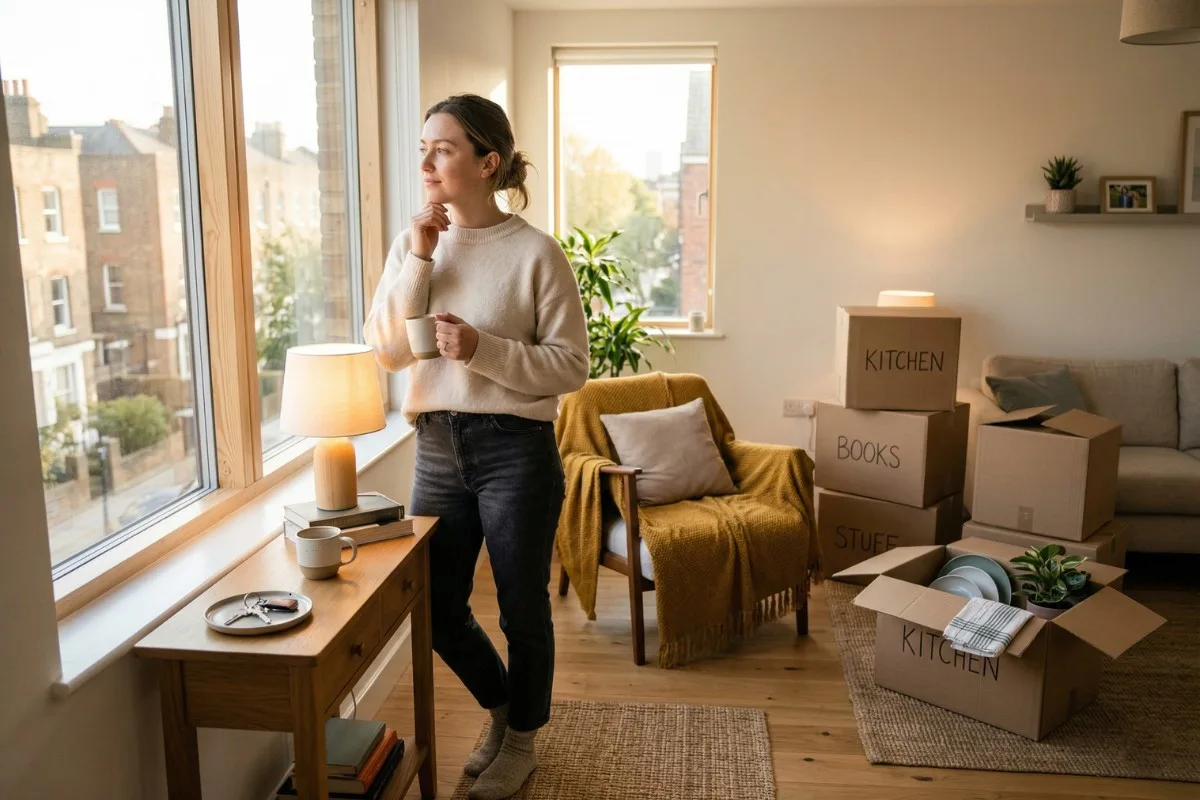
You checked the front door lock twice. Then a third time. Then you ate cereal standing over the kitchen sink at 11 PM because there was nobody to judge you for it.
Both of those things happened on the same night. And both of them were completely normal.
Living alone for the first time is this strange cocktail of feelings that nobody prepares you for.
One minute you’re rearranging your furniture at midnight because you can. The next minute you’re lying in bed wondering what that sound was, and whether you should have bought the apartment on the second floor instead.
Maybe you just signed your first solo lease after years of roommates.
Maybe you moved out of your parents’ house, and the freedom is intoxicating and terrifying in equal measure.
Maybe you’re starting over after a breakup or a divorce, and the empty side of the bed feels less like space and more like a wound.
Whatever brought you here, you’re not doing something unusual.
There are 38.1 million single-person households in the United States right now. That’s roughly 29% of all households in the country. And 15.7% of every household in America is a woman living alone. You are not an outlier. You are a population.
But here’s the thing. Nobody wrote a real guide for you.
There are plenty of “10 tips for living alone!” listicles that tell you to buy a plunger and learn how to cook.
Sure, you should do both. But nobody talks about the Sunday evening loneliness that hits like a truck.
Nobody addresses the financial reality of paying for everything yourself when women still earn 83 cents on the dollar.
Nobody tells you what to do when you’re sick at 2 AM, and there’s no one to drive you to urgent care.
This guide does.
My name is Elle, and I’ve been living alone in the United States for over seven years now.
I wrote this because when I started, a guide like this didn’t exist. Not in one place. Not with the emotional honesty and the practical systems and the actual data.
So I built it — everything I wish someone had handed me on day one.
It’s long. It’s thorough. And you’re going to want to bookmark it, because you’ll come back to it at 2 AM on a random Tuesday when the silence gets loud.
- 1. Before You Even Move In — What Nobody Warns You About
- 2. Your First Week Alone — Surviving the Silence
- 3. The First Month — When the Novelty Wears Off
- 4. Month Three and Beyond — When It Starts to Feel Like Yours
- 5. The Money Reality — How to Actually Afford Living Alone
- 6. Setting Up Your First Solo Home — What You Actually Need (and What Can Wait)
- 7. Home Maintenance You Can Handle Yourself (Even If You’ve Never Touched a Tool)
- 8. Cooking for One Without Wasting Food (or Your Sanity)
- 9. Feeling Safe at Home — A Practical (Not Paranoid) Security Guide
- 10. Emergency Preparedness When There’s No One Else to Call
- 11. Building a Social Life That Doesn’t Depend on a Roommate
- 12. Holidays, Birthdays, and Sunday Evenings — Navigating the Hard Days
- 13. Dating While Living Alone — The Safety Rules You Need
- 14. Working From Home Alone — When Your Apartment Is Everything
- 15. Should You Get a Pet? (What the Research Actually Says)
- 16. Seasonal Survival — Winter Alone, Summer Alone, and Everything Between
- The Thing Nobody Tells You
- FAQs
1. Before You Even Move In — What Nobody Warns You About
Here’s what people will tell you when you announce you’re moving out on your own:
- “That’s so exciting!”
- “Aren’t you scared?”
Sometimes the same person will say both. In the same sentence.
And the honest answer to both is yes.
That’s the part nobody warns you about — the feelings don’t take turns.
You’ll be scrolling for apartments with your heart racing from excitement and anxiety at the exact same time. You’ll sign the lease feeling like the most independent woman alive, and then cry in your car on the way home because it suddenly got very real.
None of that means you’re not ready. It means you’re human.
1.1 The Pressure That Comes With the Decision
If you’re a woman, the decision to live alone comes with baggage that men almost never deal with.
- Your parents frame their worry as safety concerns, but underneath it is often quiet discomfort with you choosing to be alone
- Friends in relationships give you the look. The “oh, that’s… brave” look.
- Society has a word for women who live alone that it doesn’t have for men
Researchers actually have a name for this — “singlism.”
Coined by Harvard-trained psychologist Dr. Bella DePaulo, who found that single people are consistently rated as less friendly and trustworthy in experimental studies.
A University of Missouri study of never-married women over 30 found they feel caught in a double bind:
- Heightened visibility — the bouquet toss at weddings, the “so are you seeing anyone?” at Thanksgiving
- Invisibility — people assuming you must be married with kids
The pressure is worst in your mid-20s through mid-30s. It tends to ease after 35, not because the world gets kinder, but because you stop caring as much.
Here’s something I want you to hold onto: wanting to live alone and wanting a partner are not mutually exclusive.
You can love your solo life and still wish someone would ask how your day was. You can feel empowered and lonely on the same Tuesday.
As one woman put it:
I want other women to know that yearning for a family life doesn’t make you any less empowered or feminist.
1.2 Your Starting Point Matters
Not every woman arrives at solo living from the same door. The emotional weight you’re carrying depends on which one you walked through.
Moving out of your parents’ house?
The primary challenge is learning to trust yourself with the basics.
Groceries, bills, decisions that used to be someone else’s job. The excitement is real, but so is the low-key terror of being fully responsible for your own life.
That’s not weakness — that’s the learning curve.
Starting over after a breakup?
Your old routines are ghosts now.
The side of the couch they sat on. The restaurants you went to together. The instinct to text them something funny. The biggest risk here isn’t loneliness — it’s rushing into a rebound just to fill the silence.
Don’t. The silence is where you find yourself.
Rebuilding after a divorce?
This is identity work. You’re figuring out who you are outside of a marriage.
If you have kids, the alternating custody schedule creates stretches of alone time that can feel disorienting.
Neuroscience research shows your brain literally builds a construct of your partner over years. When they’re gone, it needs time to rewire. Give it that time.
After losing a partner?
Grief and logistics are happening simultaneously, and that combination is brutal.
Everything practical — cooking, bills, maintenance — now carries emotional weight on top of the logistical load.
Bereavement support groups are among the most effective interventions for loneliness. This is one situation where asking for help isn’t optional. It’s necessary.
Wherever you’re starting from, the first step is the same.
You acknowledge where you are. You stop pretending you’re fine when you’re not. And you give yourself permission to figure it out one day at a time.
Which brings us to day one.
2. Your First Week Alone — Surviving the Silence
Nobody talks about the first night enough.
You’ve unpacked maybe two boxes. The bed is made, but nothing else feels settled. And then it gets dark.
The apartment sounds different at night. Every creak in the hallway, every knock from the pipes, every muffled noise from a neighbor, your brain turns all of it into something threatening.
You will check the front door lock more than once. That’s fine. Everyone does.
Here’s what else is coming this week that nobody warns you about:
- The silence when you walk in the door. No one saying hey. No background noise of someone else existing. Just you and whatever you bring with you.
- Mealtime loneliness. This one catches people off guard. As one woman described it: “Eating alone is a little strange. Preparing meals is an act of love, and eating them is such a communal activity.” Cooking for yourself will feel weird at first. That’s okay.
- The Sunday evening dip. Weekend’s ending, Monday’s coming, and the apartment feels extra quiet. This is the single most commonly reported loneliness trigger for people living alone — and almost nobody writes about it.
- Coming home to no one. The door opens to exactly how you left it. No one moved anything. No one turned on a light. It’s just… still.
These are not signs that you made a mistake. These are signs that you’re adjusting. And adjusting takes time.
2.1 Your First-Week Emotional Survival Kit
You don’t need to have everything figured out this week. You need to get through it. Here’s what actually helps:
- Pre-load your phone with a comfort playlist, a comfort show, and the number of a person you can call at 9 PM when the walls feel too close
- Make your bed first. Before anything else. A made bed in an otherwise chaotic apartment gives you one thing that feels finished.
- Leave a light on. Seriously. Walking into a lit apartment after dark changes the entire feeling. Put a lamp on a timer if you want it automatic.
- Don’t try to unpack everything. Bed, bathroom, and one clean mug for morning coffee. Everything else can wait.
- Go outside every single day. Even if it’s just a 10-minute walk around the block. Your apartment needs to be a place you come back to, not a place you’re trapped in.
- Your first solo meal matters more than you think. Don’t just eat crackers over the sink. Make something simple. Sit down. Use a plate. It’s a small act of telling yourself: I live here now, and I’m worth the effort.
2.2 The Admin Sprint
While you’re adjusting emotionally, there’s a short list of things that actually need to happen this week:
- Lock down renter’s insurance if you haven’t already — it’s $13–$23/month, and your landlord’s policy does not cover your stuff
- Do a full walkthrough and document any existing damage with timestamped photos
- Locate and label your water shut-off valve, breaker panel, and gas shut-off. Do this before you need them, not during a crisis.
- Test your smoke and CO detectors
- Meet at least one neighbor. You don’t need to become best friends. You just need one person in the building who knows your face.
None of this is glamorous.
But getting these basics handled in week one removes a huge amount of background anxiety that you didn’t even realize was building up.
The first week is the hardest. It does not stay this hard.
3. The First Month — When the Novelty Wears Off
The first week is adrenaline. You’re in survival mode and there’s enough novelty to carry you through.
Month one is where it actually gets hard.
The excitement fades. The apartment stops feeling new and starts feeling permanent. And the weight of doing every single thing alone — every decision, every bill, every problem — starts to land.
This is the dip. Almost everyone goes through it. And almost nobody talks about it honestly.
3.1 What the Dip Actually Feels Like
It’s not one big moment of crisis. It’s a slow accumulation of small things:
- Financial anxiety hits differently now. Your first full month of solo bills arrives. Rent, utilities, groceries, internet — all from one paycheck. Seeing the numbers laid out with no one to split them with is sobering.
- Decision fatigue creeps in. What to eat. When to clean. Whether to call the landlord about that weird noise or just ignore it. Every tiny choice is yours and yours alone. It’s exhausting in a way you didn’t expect.
- Routines haven’t formed yet. You’re still figuring out when to grocery shop, how to structure your evenings, what your mornings look like. Without routines, everything takes more mental energy than it should.
- The novelty buffer is gone. Week one, eating alone felt like an adventure. Week four, it just feels like eating alone.
This is normal. This is the hardest stretch, and it’s temporary.
3.2 Healthy Solitude vs. Unhealthy Isolation — Know the Difference
Here’s something important.
Living alone and being isolated are not the same thing. But the line between them can blur if you’re not paying attention.
Healthy solitude looks like:
- Choosing to stay in because you genuinely want to recharge
- Feeling rested and content after time alone
- Still reaching out to people when you want connection
- Enjoying your own company without guilt
Unhealthy isolation looks like:
- Declining invitations because responding feels overwhelming — not because you’re recharging
- Canceling plans and feeling relief when others cancel on you
- Spending entire days without engaging with a single person
- Craving connection but continuing to pull away — the isolation paradox
- Lying about how you’re spending your time
- Emotional numbness or detachment from your own feelings
If you recognize yourself in that second list, that’s not a character flaw. That’s a signal.
It means you need support, a therapist, a daily check-in system with a friend, or structured social commitments that get you out of the apartment on a regular basis.
3.3 What the Data Actually Says
There’s a lot of fear-mongering about mental health and living alone. Here’s what the research really shows:
- A CDC study found that 6.4% of adults living alone reported depression, compared to 4.1% of those living with others
- A meta-analysis of seven longitudinal studies found a 42% higher risk of depression for people who live alone
Scary numbers in isolation. But here’s the part that gets buried:
- 93% of adults living alone reported no or low feelings of depression. The vast majority are doing fine.
- The single biggest factor? Whether you chose it. Research by Thomas & Azmitia found that self-determined solitude, living alone because you want to, has no negative mental health outcomes, and is actually associated with higher self-acceptance and personal growth.
The distinction matters. Living alone isn’t the problem.
Living alone without support, without choice, and without connection — that’s the problem.
So if you’re in the dip right now, here’s what I want you to hear.
Check in with yourself honestly. Are you choosing solitude, or are you sinking into isolation?
If it’s the first one, you’re fine — keep going. If it’s the second one, reach out. Not tomorrow. Today.
The dip ends. What comes next is better.
4. Month Three and Beyond — When It Starts to Feel Like Yours
There’s no exact date when it happens. No dramatic moment. No confetti.
But somewhere around month three, you realize you haven’t checked the front door lock three times in weeks.
You cooked dinner without thinking about it. You came home, kicked off your shoes, and felt something that took you a second to recognize.
You felt at home.
4.1 The Quiet Confidence That Builds
Nobody talks about the competence that solo living builds — slowly, invisibly, and permanently.
It starts with small things:
- You fixed a running toilet with a $7 part and a YouTube video
- You handled a billing dispute with your utility company without calling your dad
- You navigated a power outage at midnight with a flashlight and zero panic
- You assembled furniture alone and only had two extra screws left over (close enough)
Then the small things stop feeling small. As one woman put it:
Whenever someone asks me, ‘How do you know how to do that?’ I always laugh and say, ‘Who else is going to?’
That’s the shift. You stop surviving alone and start being capable alone.
And that confidence doesn’t stay inside your apartment — it leaks into everything. Work, friendships, decisions, the way you carry yourself.
4.2 The Social Life Plot Twist
Here’s something that surprises almost everyone: people who live alone tend to be more socially active than people who are married.
That’s not opinion. That’s NYU sociologist Eric Klinenberg’s finding after 300+ interviews for his book Going Solo.
He found that solo dwellers spend more time with friends and neighbors, and are more likely to volunteer in civic organizations. This is especially true for women.
The reason is simple. When you live alone, socializing becomes intentional. You don’t have the passive companionship of a roommate or partner.
So when you reach out, you mean it. When you show up, you’re fully present. Your friendships get deeper, not shallower.
A 2024 study of nearly 6,000 single adults found that single women scored higher than single men on satisfaction with their relationship status, life satisfaction, and even sexual satisfaction.
And Dr. Bella DePaulo’s 10-year study of 17,000 unpartnered people found something remarkable, those who weren’t actively looking for a partner were becoming happier over time.
Not staying the same. Getting happier.
4.3 The Identity Discovery Phase
This is the part that nobody can prepare you for because it’s entirely yours.
Without someone else’s preferences shaping your space and schedule, you start discovering things about yourself that were always there but never had room:
- What you actually like to eat when nobody else is choosing the restaurant
- How you want your mornings to feel — slow and quiet or fast and caffeinated
- What your space looks like when it’s purely an expression of you
- What time you naturally fall asleep when no one else’s schedule matters
- What you do with a free Saturday when there’s no compromise involved
One woman described it perfectly:
If you’d asked me 10 years ago, I would have told you I’d have a husband, kids, and a house in the suburbs. Turns out, I’m so happy living by myself. Many people think of living alone as a stepping stone to something better, but I don’t long for anything else.
Another put it more simply:
I can sort my books by color and not worry about anyone messing up my rainbow.
4.4 The Truth About Long-Term Solo Living
It keeps getting better. Not in a straight line — there will still be hard days, lonely evenings, and moments where you wish someone else was handling the spider in the bathroom.
But the overall trajectory is up.
The fear fades. The competence grows. The freedom stops feeling scary and starts feeling like the most valuable thing you own.
And at some point, you’ll realize that living alone didn’t just teach you how to take care of an apartment. It taught you how to take care of yourself.
Got it — keeping the community quotes as-is with vague attribution. Let’s move to the first practical deep-dive: the money section.
5. The Money Reality — How to Actually Afford Living Alone
Nobody prepares you for the moment your first solo rent payment clears, and you watch your bank account drop by a number that used to be split two ways.
Living alone is expensive. And if you’re a woman, it’s even more expensive.
5.1 The Singles Tax Is Real
There’s a name for what you’re paying — the singles tax.
According to Zillow’s 2025 analysis, solo renters pay an extra $10,470 per year compared to people who split housing costs. That’s the national average.
In New York City, it climbs to $23,400 per year. Boston: $18,084. San Jose: $19,488.
And the gender pay gap makes it worse:
- Women working full-time earn 83.7 cents on the male dollar
- Black women earn 67 cents. Hispanic women earn 57 cents.
- Female renters in NYC spend 79% of their income on a studio apartment — compared to 61% for single men
This isn’t about being bad with money. The system is structurally harder for women living alone.
Knowing that doesn’t fix it, but it does mean you should stop blaming yourself for feeling financially squeezed.
5.2 The Budget Framework That Actually Works
The standard advice is the 50/30/20 rule — 50% of after-tax income to needs, 30% to wants, 20% to savings and debt.
For your first few months solo, that might not be realistic. Here’s the adjusted version:
- 55–60% to needs (rent, utilities, groceries, insurance, transportation)
- 25% to wants (dining out, entertainment, subscriptions, clothes)
- 15–20% to savings and debt repayment
The goal is to work toward 50/30/20 over time, not to hit it perfectly on month one.
5.3 The Rent Math
You’ve probably heard the 30% rule — spend no more than 30% of your gross monthly income on rent.
Here’s the truth: for single women in most major cities, that’s increasingly unrealistic.
What to do instead:
- Aim for 30% if you can, but set an absolute ceiling of 35–40% of take-home pay for rent plus utilities
- Know that most landlords require proof of income at 3x the monthly rent, factor this into your apartment search
- If you’re spending over 40%, something else in the budget has to give. Be honest about where.
5.4 The Emergency Fund — Why You Need More, Not Less
Most financial advice says save 3 months of expenses. For solo dwellers, the target is 6 months.
The reason is simple: there’s no second income to fall back on. If you lose your job, get injured, or face an unexpected expense, it’s all on you.
- Average single-person monthly expenses: $4,641–$4,948 (Bureau of Labor Statistics, 2023–2024)
- That puts your emergency fund target at roughly $15,000–$30,000 depending on your location and lifestyle
- Start small. Even $1,000 in an emergency fund is better than nothing and covers most surprise expenses
5.5 What You’re Actually Spending Each Month
Here’s a realistic breakdown for a single woman in the US:
- Rent (1-bedroom): $1,200–$1,800+ depending on city
- Groceries: $300–$500 (USDA moderate-cost plan for adult women: ~$392/month)
- Utilities: $250–$400 (electric, gas, water, trash)
- Internet: $65–$77
- Phone: $70–$144
- Renter’s insurance: $13–$23 (yes, you need this — your landlord’s policy does NOT cover your stuff)
- Transportation: ~$756 (car payment, insurance, gas, or transit pass)
Total: roughly $2,700–$3,700/month before savings, entertainment, or anything fun.
That’s the baseline. Knowing it upfront beats discovering it in a panic in month two.
5.6 Tools That Help
You don’t need a spreadsheet. You need an app that does the tracking for you:
- YNAB ($14.99/month) — users save an average of $600 in their first two months. Best for active budgeters.
- EveryDollar (free basic tier) — simple zero-based budgeting
- Goodbudget (free) — digital envelope system, great for visual thinkers
- PocketGuard ($12.99/month) — automatically shows what’s safe to spend
- Monarch Money ($8.33/month billed annually) — cleanest interface, best for seeing the full picture
Pick one. Any system you actually use beats a perfect system you abandon in two weeks.
6. Setting Up Your First Solo Home — What You Actually Need (and What Can Wait)
The internet will hand you a 100-item “first apartment essentials” checklist and make you feel like you need all of it before move-in day.
You don’t.
Most of those lists are designed to sell you stuff, not help you move in. Here’s what you actually need, organized by when you need it.
6.1 Tier 1 — Buy Before Move-In Day
These are the things you’ll need within hours of getting your keys. Not days. Hours.
- Mattress and bedding. You will be exhausted after moving. A made bed is non-negotiable night one.
- Shower curtain and liner. Apartments almost never include them. You will not realize this until you’re standing naked in the bathroom.
- Bath towels. At least two.
- Toilet paper, hand soap, dish soap. The holy trinity of “I forgot, and now nothing works.”
- Basic cleaning supplies. You’ll want to wipe everything down before you unpack. All-purpose cleaner, paper towels, trash bags.
- First aid kit. No one else is here to grab a Band-Aid for you anymore.
- Flashlight and batteries. A power outage alone in a new apartment in the dark is a special kind of disorienting.
- Basic toolkit. Hammer, Phillips, and flathead screwdrivers, tape measure, pliers, adjustable wrench. You will need these for furniture assembly. Not eventually, day one.
- A plunger. I cannot stress this enough. A clogged toilet at 1 AM with no plunger is a crisis. Buy one before you need one.
- Fire blanket. Small kitchen fires happen. A fire blanket is easier to use than an extinguisher and doesn’t leave a mess. Keep one near your stove.
- Door security bar. Non-negotiable for women living alone. More on this in the safety section.
6.2 Tier 2 — First Week
Once you’ve survived the first night, these fill in the gaps:
- Kitchen basics: One pot, one pan, a cutting board, and a chef’s knife. That’s it. This setup lets you cook 90% of simple meals. Everything else is a luxury for later.
- Food storage containers. Essential for batch cooking and not wasting food. Don’t buy fancy ones — the cheap snap-lid set works fine.
- Curtains or blinds. Especially if you’re on the ground floor. Privacy matters from day one, but it can wait a few days if you’re tight on cash.
- Extension cords and surge protectors. Your apartment will not have outlets where you need them. Accept this and plan accordingly.
6.3 What NOT to Buy Yet
This is the part most lists get wrong. Don’t buy any of this until you’ve lived in the space for at least a month:
- A full dining table set (you’ll eat at the couch for weeks, and that’s fine)
- Specialty kitchen gadgets (you don’t need a garlic press, a spiralizer, or a waffle maker right now)
- Expensive decor (live in the space first — figure out what it needs, not what Pinterest says it needs)
- A second set of sheets (one set is fine for now — wash and dry same day)
- Anything that requires measuring the space (shelving, rugs, organizers — measure first, buy second)
Furnishing budget guideline: ~10–15% of your annual income, spread over several months. There’s no rule that says your apartment needs to be finished by week two.
6.4 The Day-One Walkthrough
Before you unpack a single box, do this first:
- Walk through every room and document any existing damage — scratches, stains, dents, broken fixtures. Photos with timestamps. Email them to your landlord. This protects your security deposit.
- Locate and label your water shut-off valve, breaker panel, and gas shut-off (if applicable). Open the panel. Look at it. Know where it is before you need it at midnight.
- Test every smoke and CO detector. Press the test button. Replace batteries if needed. If any are missing, tell your landlord in writing immediately.
- Check all locks. Front door, back door, windows, sliding doors. If anything feels loose, flimsy, or broken — report it before you sleep there.
- Meet one neighbor. Knock on a door, introduce yourself. You don’t need to become friends. You just need one person in the building who knows you exist.
6.5 The Important Documents Setup
You need two copies of everything critical — one physical set in a fireproof box, one digital set in secure cloud storage (Google Drive, iCloud, whatever you already use):
- Lease agreement
- Renter’s insurance policy
- Government-issued ID
- Social Security card
- Birth certificate
- Health insurance card
- Tax records (last 3 years)
- Bank account information
- Current medication list
- Emergency contacts with phone numbers
Also set up an ICE (In Case of Emergency) contact on your phone’s lock screen. If something happens to you, paramedics check your phone first.
If you want the full checklist version, I put together a detailed first-time living alone checklist for women that covers everything room by room — kitchen, bathroom, bedroom, living room, and all the stuff in between. Bookmark it for your next Target run.
7. Home Maintenance You Can Handle Yourself (Even If You’ve Never Touched a Tool)
Here’s a secret that nobody tells you: most home repairs are embarrassingly simple.
They look intimidating because you’ve never done them. But the gap between “I have no idea how to fix this” and “oh, that was it?” is usually a 5-minute YouTube video and a $7 part from the hardware store.
You don’t need to become a contractor. You just need to stop assuming you need one for everything.
7.1 Plumbing — The Basics
This is the stuff that panics people the most. It shouldn’t.
Clogged drain? Try these in order:
- Plunger first. Flat plunger for sinks, flanged plunger for toilets. Most clogs clear here.
- Baking soda + vinegar. Pour half a cup of each, wait 30 minutes, flush with hot water. Works on slow drains.
- Drain snake. A $10 flexible plastic tool from any hardware store. Feed it in, twist, pull out the hair clog you didn’t want to think about.
- Chemical drain cleaner. Last resort only — it’s harsh on pipes with repeated use.
Running toilet? That constant trickling sound is almost always a worn flapper valve. It’s a $5–$10 rubber piece that takes 10 minutes to swap.
YouTube “replace toilet flapper” and you’ll have it fixed before the video ends.
Know your water shut-off. You labeled this on move-in day (right?).
If a pipe bursts or a faucet won’t stop, turn off the water first, panic second. The main shut-off valve is usually under the kitchen sink, in a utility closet, or near the water heater.
7.2 Electrical — What’s Safe to DIY and What’s Not
Tripped breaker? Open your breaker panel, find the switch that’s flipped to the middle position, push it fully OFF, then flip it ON. That’s it. Takes 30 seconds.
GFCI outlet not working? Those outlets in your kitchen and bathroom with the little buttons, press the “reset” button. If it trips repeatedly, call maintenance.
When to NEVER DIY:
- Flickering lights throughout the apartment
- A burning smell from any outlet or switch
- An outlet that feels warm to the touch
- Anything involving the wiring inside your walls
These are not YouTube projects. Call your landlord or an electrician immediately.
7.3 Quick Fixes That Make You Feel Like a Pro
- Nail hole in the wall? Fill it with white toothpaste or a $4 tube of spackle. Smooth it flat. Done.
- Squeaky door? WD-40 on the hinges. Or cooking oil if you don’t have WD-40.
- Loose cabinet hinge? Tighten the screws with a Phillips screwdriver. If the screw hole is stripped, stick a wooden toothpick in it and re-screw.
- Low water pressure in the showerhead? Unscrew it, soak it in white vinegar overnight, scrub the mineral buildup off. Reattach. Feels brand new.
Every single one of these takes under 10 minutes and costs under $10. And every single one of them will make you feel like you can handle anything.
7.4 When to Call Your Landlord vs. Handle It Yourself
Simple rule of thumb:
- Your job: Clogged drains, tripped breakers, squeaky doors, replacing light bulbs, tightening screws, minor cosmetic fixes
- Their job: Anything involving the building structure, plumbing behind walls, electrical wiring, appliance replacement, mold, pest control, heating/AC systems
Always submit maintenance requests in writing (email or your building’s portal). Verbal requests disappear. Written ones create a record.
7.5 Resources to Bookmark
- DIY HIP Chicks (YouTube) — Beth Allen is a licensed contractor who teaches home repair specifically for women. Exactly what it sounds like and exactly what you need.
- Home Repair Tutor (YouTube) — Clear, beginner-friendly walkthroughs for everything from faucets to flooring
- Roger Wakefield (YouTube) — Plumbing-focused, explains things like you’re five
- Dare to Repair (book) — Written specifically for women. Covers everything from leaky faucets to running toilets to squeaky floors.
Someone will ask you how you knew how to fix something. And you’ll laugh. Who else was going to?
8. Cooking for One Without Wasting Food (or Your Sanity)
Let’s get the emotional part out of the way first.
Cooking for yourself isn’t just a logistics problem. It’s an identity shift.
You’re deciding, maybe for the first time, that you’re worth the effort of a real meal. Not takeout eaten from the container. Not cereal over the sink at 10 PM. An actual plate, an actual fork, food you made with your own hands.
That sounds small. It isn’t.
8.1 The Real Problem With Cooking for One
The entire food system is designed for families. And it works against you at every step:
- Recipes serve 4–6 people. Halving them requires math you didn’t sign up for.
- Grocery packaging is family-sized. You don’t need 5 pounds of chicken or a full bunch of cilantro that will wilt by Thursday.
- Single-person households waste ~20% more food per capita than households of four or more (Penn State study). The average American throws away $728 worth of food per year.
You’re not bad at groceries. The system isn’t built for you. Once you accept that, you can build a system that is.
Related: First Apartment Grocery List: 50+ Essentials You Need Day One
8.2 The Framework That Actually Works
Don’t meal plan 7 days a week. That’s a setup for failure and guilt when you inevitably order pizza on Wednesday.
Instead:
- Plan 4–5 meals per week. Leave room for leftovers, spontaneous plans, and the nights you just don’t feel like cooking. That’s not failure — that’s realistic.
- Choose recipes with overlapping ingredients. If Monday’s stir-fry uses bell peppers, Wednesday’s omelet should too. Same protein, different seasoning, completely different meal.
- Batch cook on Sunday. Cook a big pot of rice or quinoa. Bake or grill your protein for the week. Roast a sheet pan of vegetables. Now you’re not cooking from scratch every night — you’re assembling.
- Build bowls, not elaborate meals. Base (grain or greens) + protein + vegetables + sauce. Change the sauce, and it’s a different meal every time.
- Freeze individual portions immediately. Don’t put the whole batch in the fridge hoping you’ll eat it by Friday. You won’t. Freeze half in single servings on day one.
8.3 Grocery Shopping for One — The Cheat Codes
- Buy loose produce. You need two tomatoes, not a pack of six. Hit the loose bins.
- Frozen vegetables are your best friend. Same nutrition, no spoilage pressure. Stir-fry mixes, broccoli florets, and spinach are staples.
- The salad bar is a hack. Need a small amount of olives, chickpeas, or shredded cheese? The salad bar lets you buy exactly what you need instead of a full container.
- Eggs are the single best solo-living food. Cheap, versatile, high protein, long shelf life. Scrambled, fried, boiled, in an omelet, on toast, in fried rice. One carton lasts weeks.
- Don’t grocery shop hungry. You already know this. You’ll still forget. Set a reminder.
Monthly grocery budget target: $300–$500.
The USDA’s moderate-cost plan for an adult woman is about $392/month. You can go lower with intentional shopping, or higher if you’re in an expensive city.
Either way, tracking it for the first two months tells you what’s real versus what you assumed.
8.4 The Mindset Shift
Cooking for one isn’t sad. It’s freedom.
You eat what you want. When you want. However you want. No compromising on restaurants. No accommodating someone else’s preferences. No pretending you like something you don’t.
Your kitchen. Your rules. And if cereal for dinner happens once in a while — honestly, that’s fine too.
The point isn’t perfection. The point is that you’re feeding yourself on your terms.
I’ve written full guides on cooking for one on a budget, how to enjoy cooking even when it’s just for one, and 25+ easy recipes designed for one person if you want to go deeper.
9. Feeling Safe at Home — A Practical (Not Paranoid) Security Guide
Let’s get something straight before we start.
Living alone as a woman is not inherently dangerous. But feeling safe in your own home is non-negotiable. And there’s a difference between being paranoid and being prepared.
This section is about being prepared.
9.1 The Numbers You Should Actually Know
Most of what you’ve been told about home safety is either outdated or designed to scare you into buying something. Here’s what the data actually says:
- 60% of convicted burglars said the presence of an alarm system would cause them to choose a different target
- 81% of break-ins happen through the first floor — front door, back door, or windows
- Most burglaries happen during daytime, between 10 AM and 3 PM — when you’re at work, not when you’re sleeping
- The average break-in lasts 8–12 minutes. Average police response time: 10 minutes. The math is not in your favor unless you have deterrents in place.
- Homes without a security system are 300% more likely to be burglarized
The takeaway? Visible deterrents matter more than anything. A burglar who sees a camera, a security sign, or an alarm system moves on to an easier target.
9.2 Renter-Friendly Security Upgrades
You don’t need to own your place or drill into walls to secure it. Everything below works in a rental apartment.
Locks and doors:
- Smart lock — August WiFi Smart Lock retrofits over your existing deadbolt in 10 minutes. Wyze Lock Pro is the budget pick with a fingerprint reader. No landlord permission needed for either.
- Door security bar — $20–$30. Wedges under the handle and makes the door nearly impossible to force open. Use it every night.
- Portable door lock — $15–$25. Clips into the door frame from the inside. Great for travel too.
Cameras and visibility:
- Video doorbell — Ring is the most popular.
- Security cameras — Blink or Wyze Cam v3. Stick them in a window facing your entrance. Visible cameras are deterrents.
- Motion-sensor LED lights — $15–$40, adhesive mount, no wiring. Put them at your front door and any dark corners near entry points.
Full systems (if you want one):
- SimpliSafe — $230 equipment, $0–$32/month, no contract, DIY install under 1 hour. Best for renters.
- Ring Alarm — $200+ equipment, $3.99–$19.99/month
- Both are completely portable. Take them with you when you move.
Budget-friendly basics:
- Adhesive door and window sensors ($15–$25 for a pack)
- Window security film — makes glass shatter-resistant ($30–$80 DIY per window)
- Sliding window/door bars ($10–$25)
- Smart plugs with light timers ($15–$25 for a pack) — simulate someone being home when you’re not
9.3 Daily Habits That Matter More Than Gadgets
All the tech in the world doesn’t help if your habits are sloppy. These cost nothing:
- Lock the door the second you walk in. Even while you’re home. Especially while you’re home.
- Double-check all locks before bed. Make it a ritual, not a paranoia spiral. Same order every night. It becomes automatic within a week.
- Vary your routine. Don’t leave and arrive at exactly the same time every day. Criminals watch for patterns.
- Never open the door without verifying who it is. Peephole, doorbell camera, or a simple “who is it?” through the closed door.
- Never tell strangers you live alone. Delivery drivers, repair workers, casual conversations. Use “we” instead of “I” when talking about your home.
- Use first initial only on your mailbox, doorbell, and delivery orders. No full name, no gender signal.
- Use Amazon Locker or workplace delivery for packages when possible. Packages on a doorstep signal your schedule.
9.4 Digital Safety
This one gets overlooked constantly:
- Never post your location in real-time on social media. Share the sunset photo after you’ve left.
- Don’t announce vacations before or during the trip. Post when you’re back.
- Review your privacy settings on every social platform quarterly. Limit who can see your posts, your location, and your tagged photos.
- 61% of women post on social media when away from home — and it’s one of the top ways burglars identify empty homes. Don’t be part of that statistic.
9.5 The Hacks Women Actually Use
I spent hours going through Reddit threads where women share what actually makes them feel safe at home.
These aren’t in any official safety guide. But thousands of women swear by them:
- A pair of men’s shoes by the front door. Every visitor notices. Every delivery person notices. It takes 10 seconds and costs nothing.
- Shouting “babe, your food is here!” when answering a delivery at the door. Silly? Yes. Effective? Also yes.
- A TV or radio on a timer when you’re out. Sound and light make an apartment look occupied.
- A dog bowl by the front door — even if you don’t have a dog. Bonus points if it says “Brutus” on it.
- A “beware of dog” sign — same principle. Cheap, effective, zero maintenance.
Some of these will make you laugh. That’s fine. They also work.
I’ve written a much deeper guide on safety specifically — covering emergency scenarios, self-defense, natural disasters, and more. You can read the full version here: Living Alone During a War: Complete Safety Guide for Women.
10. Emergency Preparedness When There’s No One Else to Call
The fear isn’t really about break-ins. If you’re being honest, the real fear is: what if something happens to me and nobody knows?
A medical emergency at 3 AM. A fall in the shower. Choking on dinner with no one to help. These aren’t dramatic scenarios — they’re the quiet fears that live in the back of every solo dweller’s mind.
The solution isn’t pretending those fears don’t exist. It’s building systems that make them irrelevant.
10.1 The Daily Check-In System
This is the single most important safety habit for anyone living alone. And it’s free.
Pick one person. Agree on a time. Check in every day.
It can be a text, a Snapchat streak, a voice note — doesn’t matter.
The only thing that matters is this: if you don’t respond by the agreed time, that person takes action. Calls you. Calls your neighbor. Comes over. Whatever you’ve agreed on.
Apps that automate this:
- Snug Safety (free) — daily check-in app. If you don’t respond, it automatically alerts your emergency contacts.
- Life360 or Apple Find My — real-time location sharing with trusted people
- bSafe — personal safety app with SOS, live GPS tracking, and automatic alerts
This isn’t about being dramatic. It’s about removing the one scenario that actually keeps solo dwellers up at night.
10.2 Medical Emergency — When You’re Alone
Set these up today. Not tomorrow. Today.
- Medical ID on your phone. iPhone: Health app → Medical ID. Android: Settings → Safety & Emergency. Paramedics check your phone first. Include your name, blood type, allergies, medications, emergency contacts, and any conditions.
- ICE contacts on your lock screen. If your phone is locked, first responders can still see these.
- Emergency SOS. iPhone: press the side button 5 times rapidly. Android: press power button 5 times. It calls 911 and texts your emergency contacts your location. Practice this once so you know how it works.
- Smart speaker as a lifeline. “Hey Siri, call 911” or “Alexa, call 911” works when you can’t reach your phone. If you live alone, a smart speaker in the bedroom is a safety device, not a luxury.
- If you’re able during an emergency, unlock your front door. Paramedics can’t help you if they can’t get in.
10.3 Your Emergency Kit
Based on Ready.gov and Red Cross recommendations, adapted for solo living:
The basics:
- Water — 1 gallon per day, minimum 3-day supply
- Non-perishable food — 3-day to 2-week supply
- Battery-powered or hand-crank radio
- Flashlight with extra batteries (keep one in the bedroom, one in the kitchen)
- Portable phone charger — keep it charged at all times
- Complete first aid kit
- Prescription medications — at least a 2-week backup supply
The solo-specific additions:
- Copies of important documents in a waterproof container
- Cash in small bills (ATMs don’t work during power outages)
- A whistle — sounds absurd, but if you’re trapped or injured, it carries further than your voice
- A written list of your emergency contacts, medications, and allergies — in case your phone is dead
Keep all of this in one bag or container in an accessible spot. Not buried in a closet. Somewhere you can grab in 60 seconds.
10.4 Scenario Quick Reference
Break-in while you’re home:
- Stay calm and quiet
- Do not confront the intruder. Possessions are replaceable. You are not.
- Call 911. Use text-to-911 if speaking would put you at risk.
- Lock yourself in a room. Bathroom or bedroom with a lock.
- If confronted — comply. Nothing you own is worth the risk.
Power outage:
- Flashlights first. Candles are a fire risk — avoid them if possible.
- Your freezer stays cold for 48 hours if full, 24 hours if half full. Don’t open it unless necessary.
- Fridge stays cold about 4 hours with the door closed.
- Unplug electronics to prevent surge damage when power returns.
- Portable charger keeps your phone alive. This is your lifeline.
You’re sick and alone:
- Have a sick-day kit pre-made: soup (canned or frozen), electrolytes, fever reducer, thermometer, heating pad, comfort shows downloaded on your phone
- Know your “sick enough to need a doctor but still well enough to drive” window. It’s smaller than you think.
- If you’re too sick to drive, call for a ride. Don’t tough it out. Uber to urgent care is better than waiting until it becomes an ambulance situation.
10.5 Critical Numbers — Put These on Your Fridge
- 911 — obvious, but have it in your muscle memory
- Poison Control: 1-800-222-1222
- National Domestic Violence Hotline: 1-800-799-7233
- 988 Suicide & Crisis Lifeline: call or text 988
- RAINN Sexual Assault Hotline: 1-800-656-4673
- Your landlord’s emergency number
- Your emergency contacts (at least two people)
- Nearest ER address — you don’t want to Google this during an emergency
Print this list. Stick it on the fridge. Screenshot it on your phone. When you need these numbers, you won’t be in a state to search for them.
10.6 Self-Defense: A Quick Overview
You don’t need a black belt. You need enough knowledge to create distance and escape.
- Brazilian Jiu-Jitsu — teaches how to escape grabs using leverage, not strength. Designed for smaller people against larger attackers.
- Krav Maga — Israeli military technique, built for real-world scenarios. Practical, aggressive, effective.
- RAD (Rape Aggression Defense) — free program offered by many police departments and universities. Specifically designed for women.
- Pepper spray — legal in all 50 states for self-defense. SABRE keychain ($10–$15) is the most recommended brand.
- Personal alarm — 120–140 dB, legal everywhere, no restrictions. $10–$25. Attach to your keychain.
The goal of self-defense is always escape, not winning a fight. Create distance. Make noise. Get out.
11. Building a Social Life That Doesn’t Depend on a Roommate
Here’s the thing about living with other people — socializing happens to you.
Your roommate’s in the kitchen. Your partner’s on the couch.
There’s always background noise, always someone to bounce a thought off of, always passive companionship filling the gaps.
When you live alone, that disappears. And if you don’t replace it with something intentional, the gap gets loud.
But here’s what nobody expects: people who live alone tend to be more socially active than people who are married.
That’s not wishful thinking. NYU sociologist Eric Klinenberg found exactly that after interviewing 300+ people for his book Going Solo.
Solo dwellers spend more time with friends and neighbors, and are more likely to volunteer.
This is especially true for women, whose time for social engagement often shrinks after marriage and kids.
The reason is simple. When socializing becomes a choice instead of a default, you show up differently. More present. More intentional. More you.
11.1 What the Research Says Actually Works
A 2025 study by researchers at the University of Tampa surveyed 621 adults and ranked loneliness-fighting strategies by actual effectiveness. Not vibes. Data.
Here’s what works, ranked from most to least effective:
- Investing in existing relationships — deepening the friendships you already have, not just adding new ones
- Being productive — hobbies, creative projects, meaningful work. Idle time feeds loneliness. Purpose fights it.
- Healthy lifestyle changes — exercise, hiking, cooking well. Physical health and social health are more connected than you’d think.
- Expanding your social network — clubs, classes, meetups, group activities
- Volunteering — provides regular contact, shared purpose, and the kind of connection that feels earned
- Professional support — therapy, especially CBT. Not a last resort. A smart first move.
- Cognitive reframing — journaling, reframing loneliness as temporary, challenging the story you tell yourself about being alone
Key finding from the study: active coping strategies and seeking emotional support were most strongly associated with lower loneliness. Substance use, avoidance, and emotional venting were associated with higher loneliness.
In other words, numbing doesn’t work. Acting does.
11.2 Platforms and Tools Worth Trying
- Meetup.com — shared-interest events with recurring attendance. The recurring part matters — showing up once doesn’t build friendships. Showing up five times does.
- Bumble BFF — got a major redesign in 2025 with a new Groups feature. 56% of Gen-Z and millennials are actively seeking new friendships. You’re not the only one looking.
- Introvrs — newer app, values-based friendship matching. Built for people who’d rather skip small talk.
- Nextdoor — hyperlocal neighbor connections. Surprisingly useful for finding walking buddies, book clubs, and people who understand your specific neighborhood.
The real advice nobody gives you: join something that meets weekly. A running club. A pottery class. A volunteer shift.
The specific activity matters less than the rhythm. Friendships are built on repeated, unplanned interaction, and weekly commitments create exactly that.
11.3 Build Your “Personal Board of Directors”
When you live alone, you need a deliberate support network. Not a huge social circle — a small, specific group of people who each serve a role:
- Emergency Contact #1 — a close local friend who has your spare key
- Emergency Contact #2 — a backup person in a different location
- Your trusted neighbor — the one who knows you exist and would notice if your mail piled up
- Your late-night call person — someone who’s agreed to pick up at 11 PM when the walls close in
- Your practical help person — the one who knows a good plumber, will help you move a couch, or can talk you through a weird noise in your apartment
- Your honest friend — the one who’ll tell you if you’re isolating, not just “going through a phase”
You don’t need six different people for this. Some roles overlap. But you need to know who fills each one, and they need to know they’re on the list.
11.4 The 15-Minute Rule
Former U.S. Surgeon General Dr. Vivek Murthy recommends 15 minutes of intentional connection per day as a minimum for combating loneliness.
That’s it. Fifteen minutes.
- A phone call with a friend during lunch
- A real conversation with a coworker (not just Slack messages)
- Coffee with a neighbor
- A voice note exchange with someone you love
- An actual text conversation, not just reacting to stories
Scrolling social media doesn’t count. Watching other people’s lives isn’t connection. It’s spectatorship. And research consistently shows it makes loneliness worse, not better.
Fifteen minutes. Every day. It’s the cheapest, most effective mental health tool you have.
12. Holidays, Birthdays, and Sunday Evenings — Navigating the Hard Days
Most days, living alone feels normal. Some days it even feels great.
And then Thanksgiving rolls around. Or your birthday. Or a random Sunday evening at 7 PM when the weekend is winding down, and the apartment is so quiet you can hear the fridge humming.
These are the hard days. Not because something is wrong with you. Because certain moments are designed for company, and when the company isn’t there, the absence gets loud.
12.1 The Sunday Evening Thing
This one deserves its own section because it’s the most commonly reported loneliness trigger for solo dwellers, and almost nobody writes about it.
Here’s why Sundays hit different:
- The weekend is ending, and you have nothing to show for it except free time you spent alone
- Monday is coming, and there’s no one to complain about it with
- Social media is full of couples and friend groups wrapping up their weekends together
- The apartment is at its quietest. No plans coming. Just you and the evening stretching out.
The fix isn’t pretending it doesn’t happen. The fix is building a Sunday evening ritual that you actually look forward to:
- A specific show you only watch on Sundays
- A weekly phone call or FaceTime with someone you love
- A cooking project — Sunday is the perfect batch-cooking day
- A long walk before sunset
- A “week ahead” planning session with your favorite drink
The point is structure. Unstructured alone time on a Sunday evening is where loneliness breeds. Structured alone time on a Sunday evening is just a nice night in.
12.2 Holidays Alone
The first holiday season alone is rough. Not because you’re miserable, but because the world assumes you must be.
Every commercial, every movie, every Instagram post screams togetherness. And if you’re alone, it can feel like you’re failing some unwritten test.
You’re not.
Here’s what actually helps:
- Plan proactively. Start thinking about Thanksgiving and Christmas in September or October. Having a plan — even a solo one — eliminates the dread of “I don’t know what I’m doing.”
- Create your own traditions. A specific meal you cook. A movie you watch every year. A charity you volunteer with. New traditions replace the old ones faster than you’d think.
- Host a Friendsgiving. You’d be surprised how many people in your life also don’t have plans. You just have to be the one who asks.
- Volunteer. Soup kitchens, shelters, community events — they all need help during the holidays, and showing up for others is one of the fastest ways to stop feeling sorry for yourself.
- Limit social media. This is the one time of year where the comparison trap is at maximum strength. Mute, unfollow, or just log off. You’re not missing what they have. You’re seeing their highlight reel.
And if none of that appeals to you, it is genuinely okay to spend a holiday alone.
Order your favorite food. Watch something you love. Light a candle. Enjoy the quiet. Not every holiday needs to be a production.
12.3 Birthdays
Birthdays alone carry a specific sting that holidays don’t.
Holidays are about traditions. Birthdays are about YOU. And when no one is there to make a fuss, it can feel like proof that you don’t matter. Which is a lie.
But it’s a convincing one at 8 PM on your birthday with no plans.
The fix:
- Tell people what you need. Your friends aren’t mind readers. If you want plans, make them. If you want someone to organize something, ask someone specific. “I’d love it if you planned something for my birthday” is not desperate. It’s clear communication.
- Plan your own celebration. Dinner at a restaurant you’ve been wanting to try. A day trip. A spa appointment. A ridiculously expensive coffee. Treat yourself the way you’d treat someone you love, because that’s what’s happening.
- Lower the stakes. Not every birthday needs to be an event. Sometimes the best birthday is just a really good day that you designed for yourself.
12.4 When You’re Sick and No One’s There
This is the one that catches people off guard every time.
You can handle loneliness. You can handle silence. But being sick alone in the middle of the night is a different level of vulnerable.
As one woman put it:
On top of being sick you have the added stress of always keeping track of how close you are to that sweet spot of ‘sick enough to go to the doctor but still well enough to drive yourself there.’ It’s a tiny window, and if you push it, you’re screwed.
Build your sick-day kit before you need it:
- Canned or frozen soup
- Electrolytes (Pedialyte, Liquid IV, or store-brand equivalent)
- Fever reducer (Tylenol AND Ibuprofen — they work differently)
- Thermometer
- Heating pad
- Comfort shows downloaded on your phone or tablet (streaming crashes when you need it most)
- Your doctor’s after-hours number saved in your phone
And remember, if you’re too sick to drive, call a ride to urgent care.
An Uber to the doctor is better than waiting until it’s an ambulance situation.
13. Dating While Living Alone — The Safety Rules You Need
Living alone doesn’t mean living without a love life. But it does mean the safety calculus around dating changes completely.
When you had roommates, someone knew when you came home. Someone would notice if you didn’t. Someone was on the other side of the wall if things got weird.
Now it’s just you. And that’s fine, as long you’re smart about it.
13.1 Before the Date
- Never share your address with someone you haven’t met in person. Not on the app. Not over text. Not even if they seem great. Great is easy to fake over a screen.
- Tell a trusted friend where you’re going. Restaurant name, time, and the person’s first name. Share your live location through your phone.
- Set up a check-in. Text your friend when you arrive and when you leave. If they don’t hear from you by a specific time, they call.
- Drive yourself or take your own ride. Don’t let a first date pick you up from your home. You want the ability to leave whenever you want — and you don’t want them knowing where you live.
- Google them. Full name + city. Check LinkedIn. Check social media. It takes 5 minutes and can save you an evening — or worse.
13.2 First Few Dates
- Always meet in public. Coffee shop, restaurant, bar — somewhere with other people around.
- Don’t go to their place on a first date either. Same safety principle in reverse.
- Watch your drink. Don’t leave it unattended. If you come back and something feels off, order a new one.
- Trust your gut. If something feels wrong, it is wrong. You do not owe anyone a reason for leaving. “I’m going to head out” is a complete sentence.
13.3 Bringing Someone Home
This is the part nobody talks about, and it’s the part that matters most when you live alone.
Wait multiple dates before bringing anyone to your home. There’s no magic number, but here’s the checklist to ask yourself before you invite someone over:
- Do I know their full name, and can I verify it?
- Has a friend met them, or at least seen their photo and knows their name?
- Does someone know they’re coming to my place tonight?
- Do I feel safe — actually safe, not just excited?
- Would I be comfortable if this person knew where I lived and I never saw them again?
That last question is the real test.
When they do come over:
- Make sure a friend knows. Name, photo, and a check-in time.
- Keep your phone charged and accessible
- Don’t feel pressured to let someone stay the night. “I had a great time but I sleep better alone” is perfectly valid.
- Trust any discomfort. You invited them in — that doesn’t mean you owe them anything beyond what you’re comfortable with.
13.4 The Ongoing Stuff
As things get more serious:
- Don’t give out keys too early. Living alone means your home is your sanctuary. Sharing that access is a big deal. Treat it like one.
- Keep only your initial on the doorbell and mailbox. This isn’t just for strangers — it’s a good habit in general.
- Video doorbell stays on. Even in a relationship. It’s your home security, not a trust issue.
- Maintain your solo routines. The independence you built is valuable. A good partner will respect it, not try to absorb it.
Dating while living alone is not harder. It’s just more intentional. And intentional is exactly how you’ve been building everything else in this life.
14. Working From Home Alone — When Your Apartment Is Everything
Your apartment is now your bedroom, your kitchen, your living room, your office, your gym, and your social space.
That’s a lot for four walls to carry.
When you live with other people and work from home, there’s still a rhythm. Someone making coffee. A door opening and closing. Background life happening around you.
When you live alone and work from home, you can go an entire day without hearing another human voice. And that’s not an exaggeration, it’s a Tuesday.
14.1 The Loneliness Numbers Are Real
- 67% of remote workers report feeling lonely at work sometimes or often — and those working from home alone are hit hardest, with 74.4% reporting isolation (Ringover, 2024)
This doesn’t mean remote work is bad.
It means remote work while living alone requires deliberate countermeasures that most people don’t think about until the walls start closing in.
14.2 What Actually Helps
Create third spaces. Your apartment shouldn’t be the only place you exist.
Work from a coffee shop, a library, or a coworking space at least 1–2 days a week.
You don’t need to talk to anyone there. Just being around other humans changes the chemistry of your day.
Build a hard boundary between work and not-work. When your office is 10 feet from your bed, the lines blur fast. Pick an end-of-work ritual and do it every day:
- Close the laptop at a specific time. Not “when I’m done.” A time.
- Change your clothes. Even if it’s from work pajamas to evening pajamas.
- Leave the apartment — even for a 10-minute walk around the block
- If possible, work in a specific spot and don’t use that spot for anything else. Your brain needs the separation, even if your apartment doesn’t have a spare room.
Schedule daily human interaction. Not optional. Not “if it happens.” Scheduled.
- A phone call during lunch
- A video coffee with a coworker
- A walk with a neighbor after work
- Even a real conversation with the barista at the coffee shop counts
Take an enrichment walk every day. No phone. No podcast. No music. Just walk and observe.
It sounds almost insultingly simple. But the combination of movement, fresh air, and unstructured mental space is one of the most effective loneliness interventions that exists.
Your brain needs input that isn’t a screen.
14.3 The Trap to Watch For
The most dangerous pattern for solo remote workers is this: you stop leaving the apartment.
Not dramatically. Not all at once. It just gradually becomes easier to stay in. Groceries get delivered. Meetings happen on Zoom.
The couch is right there. Why bother going anywhere?
And then one day you realize you haven’t left the apartment in three days, and you can’t remember the last non-work conversation you had.
If that sounds familiar, it’s not laziness. It’s the early stage of isolation.
Go back to the section on healthy solitude vs. unhealthy isolation. Read the warning signs again. And then put on shoes and walk outside.
The apartment is your home. It shouldn’t also be your entire world.
15. Should You Get a Pet? (What the Research Actually Says)
Every “tips for living alone” article eventually says the same thing: get a cat.
That’s not terrible advice. But it’s also not the whole picture.
The research on pets and solo living is more nuanced and more interesting than “animals cure loneliness.”
15.1 What the Data Shows
- A 2025 study published in Nature found that pet owners living alone experienced significantly lower loneliness than non-pet owners living alone. The effect was more pronounced for solo dwellers than for people living with others.
- A 2024 study in JAMA Network Open found that pet ownership may protect against cognitive decline for adults 50+ who live alone
- In loneliness intervention research, animal-assisted programs showed 100% efficacy, including, surprisingly, robotic pets
So yes, the science is real. Pets genuinely help.
15.2 The Warning Nobody Mentions
Here’s the part that gets left out.
Research also shows that using pets as a complete replacement for human connection can backfire.
Psychologists call it “interpersonal substitution” — when your pet becomes your only source of emotional connection, and you stop seeking human relationships because the animal fills the gap.
Pets should complement your social life, not replace it.
A cat who greets you at the door is wonderful. A cat who is the only living being you’ve spoken to in four days is a warning sign.
15.3 The Practical Reality
Before you fall in love with a shelter dog on Instagram, run the numbers:
- Average pet rent: $35.65/month
- Average pet deposit: ~$300
- 80% of US rental apartments allow pets — but always check your lease first
- Monthly costs: food, litter, vet visits, and the occasional destroyed shoe. Budget $50–$150/month depending on the animal.
15.4 Best Pets for Solo Apartment Living
- Cats — lower maintenance, independent, don’t need walks, perfectly suited to apartment life. The internet stereotype exists for a reason.
- Small dogs — more companionship and structure (daily walks force you outside), but higher maintenance and harder in small spaces
- Fish — surprisingly effective stress reducers. Zero noise, zero damage to your security deposit, and watching them is genuinely calming.
The best pet for you is the one you can afford, care for consistently, and still have energy left over for human connection.
If that’s a cat, great. If that’s a fish named Gerald, also great.
16. Seasonal Survival — Winter Alone, Summer Alone, and Everything Between
Living alone feels different depending on the season. And nobody warns you about that either.
Winter and summer bring completely different emotional challenges. Knowing what’s coming makes it easier to handle when it arrives.
16.1 Winter Is the Hard One
Short days, long nights, cold weather keeping you indoors. Winter alone can feel like the apartment is shrinking.
And for some women, it’s more than just a mood.
Seasonal Affective Disorder (SAD) affects about 5% of Americans, and women are 4x more likely to experience it.
That’s not “winter blues.” That’s a clinical condition with real symptoms: fatigue, oversleeping, carb cravings, social withdrawal, and a persistent heaviness that doesn’t lift.
What actually works against SAD:
- Light therapy box — 20–30 minutes every morning. Sit it on your desk or kitchen counter while you have coffee. This is the most recommended first-line treatment.
- Vitamin D supplementation — your doctor can check your levels, but most people in northern climates are deficient by January
- Morning outdoor walks — even 15 minutes of natural light before 10 AM helps reset your circadian rhythm
- Consistent wake-up time — your body clock needs regularity in winter more than any other season
- Exercise — doesn’t have to be intense. A 30-minute walk counts. Movement is a proven mood stabilizer.
- CBT (cognitive behavioral therapy) — shown to produce the longest-lasting effects of any SAD treatment. Not just for crisis — for prevention.
Winter-specific solo living prep:
- Stock your freezer with pre-made meals before November. Cooking motivation drops when it’s dark at 4:30 PM.
- Have a backup heating plan. Space heater, extra blankets, know your landlord’s emergency maintenance number.
- Make sure someone will check on you during severe weather. Snowstorms, ice storms, power outages — these are higher stakes when you live alone.
- Front-load your social plans. Book dinners, classes, and hangouts in advance. January and February are the months where isolation creeps in hardest. Don’t leave your social calendar empty.
16.2 Summer Is Sneaky
Winter gets all the attention. But summer has its own version of loneliness — FOMO season.
Everyone’s at the beach. Everyone’s at barbecues. Everyone’s posting group photos from rooftops and pool parties.
And if your feed is full of that while you’re sitting alone in your apartment on a Saturday afternoon, it can feel like everyone got invited to summer except you.
The antidote:
- Solo outdoor activities are summer’s superpower. Farmers markets, evening walks, outdoor dining for one, reading in the park, hiking. Summer is the easiest season to be alone outside — and outside is where the loneliness fades fastest.
- Mute or unfollow aggressively. You are not obligated to watch everyone else’s highlight reel. Protect your peace.
- Host something. A rooftop hangout, a picnic in the park, a movie night with a projector. You don’t need a partner or a group to be the person who brings people together.
Summer loneliness is less about the weather and more about the comparison trap. Step away from the screen and into the sun.
It’s hard to feel left out when you’re the one having a good time.
The Thing Nobody Tells You
The thing nobody tells you about living alone is that it changes you. Quietly. Permanently. In ways you won’t notice until someone points them out.
You’ll be at dinner with friends and casually mention that you fixed your own garbage disposal last weekend.
They’ll look at you like you performed surgery. And you’ll realize — oh. That’s not normal for everyone. But it’s normal for me now.
The fear fades. Not all at once. Not on a schedule. But one evening you’ll come home, kick off your shoes, and realize you didn’t check the lock three times.
You didn’t dread the silence. You just… walked in. Like it was yours. Because it is.
Living alone didn’t just teach you how to take care of an apartment. It taught you how to take care of yourself. How to trust yourself. How to sit with yourself without needing someone else to fill the space.
Some days will still be hard. Sunday evenings will still be quiet. You’ll still wish someone else would deal with the spider in the bathroom sometimes.
But the overall trajectory is up. And once you’ve lived on your own terms, truly your own terms, it’s very hard to give that up.
You chose this. Or maybe life chose it for you. Either way, you’re here. You’re handling it. And you’re going to be just fine.
Bookmark this guide. You’ll want it at 2 AM on a random Tuesday.
I’ll be here when you do.
FAQs
Is it safe for a woman to live alone?
Yes. Living alone as a woman is not inherently dangerous. Burglary rates have dropped 61% since 2004, and most break-ins happen during the daytime when you’re not home. The key is preparation, not paranoia — a basic security setup (smart lock, video doorbell, door security bar) and consistent daily habits (locking up immediately, varying your routine, not advertising that you live alone) make a massive difference. Homes with visible security systems are 300% less likely to be targeted.
How much does it cost to live alone?
The average single person in the US spends roughly $4,641–$4,948 per month on basic living expenses (Bureau of Labor Statistics, 2023–2024). The biggest factor is rent — a one-bedroom apartment runs $1,200–$1,800+ depending on your city. Solo renters also pay what’s called the “singles tax,” an extra $10,470 per year compared to people who split housing costs (Zillow, 2025). The 50/30/20 budget framework is a good starting point, and an emergency fund of 6 months of expenses is the recommended target for solo dwellers.
Is living alone bad for your mental health?
The short answer: not if you chose it. A CDC study found that 6.4% of adults living alone reported depression, slightly higher than the 4.1% for people living with others. But that means 93% of solo dwellers reported no or low depression. Research consistently shows the decisive factor is choice. Self-determined solitude — living alone because you want to — is associated with higher self-acceptance and personal growth. Living alone without support, without choice, and without connection is where problems emerge.
How do I deal with loneliness when living alone?
A 2025 University of Tampa study ranked loneliness-fighting strategies by effectiveness. The top three: investing in existing relationships (not just adding new ones), being productive with meaningful hobbies and projects, and healthy lifestyle changes like exercise and cooking well. The Surgeon General recommends a minimum of 15 minutes of intentional human connection per day. Active strategies work. Numbing, avoidance, and venting are associated with higher loneliness, not lower.
What should I buy for my first apartment?
Before move-in day: mattress and bedding, shower curtain, towels, toilet paper and soap, cleaning supplies, first aid kit, flashlight, basic toolkit, a plunger, fire extinguisher, and a door security bar. First week: one pot, one pan, cutting board, chef’s knife, food storage containers, curtains, and extension cords. Don’t buy yet: full dining sets, specialty kitchen gadgets, or expensive decor. Live in the space first, then decide what it actually needs. Full checklist here: First Time Living Alone Checklist for Women.
How do I feel safe living alone at night?
Build a nightly routine and stick to it: lock the door the second you walk in, double-check all locks before bed in the same order every night, and use a door security bar ($20–$30). Motion-sensor lights near entry points, a video doorbell, and smart plugs that simulate someone being home all help. Keep your phone charged on the nightstand with Emergency SOS set up. And if nighttime anxiety is persistent, a smart speaker in the bedroom lets you call for help hands-free. The fear fades as the routine becomes automatic — usually within the first few weeks.
Does living alone get easier?
Yes. The first month is the hardest. You’re adjusting to silence, building routines from scratch, and carrying every responsibility alone. By month three, most women report a noticeable shift — the competence builds, the fear fades, and the space starts feeling like yours. Long-term research by Dr. Bella DePaulo found that people who embrace solo living become happier over time, not just adjusted. It doesn’t just get easier. For most women, it gets genuinely good.
How do I live alone after a breakup?
The hardest part isn’t the logistics, it’s the ghost routines. The side of the couch they sat on. The instinct to text them. The biggest risk is rushing into a rebound relationship to fill the silence. Don’t. Instead: redecorate to make the space yours, start new routines that have nothing to do with your old life, lean on your support network, and give your brain time to rewire. Neuroscience research shows your brain builds a construct of your partner over years, when they’re gone, it literally needs time to adjust. Be patient with yourself.